After a long day at the office, it’s time to come home and check out the spoils from the garden.
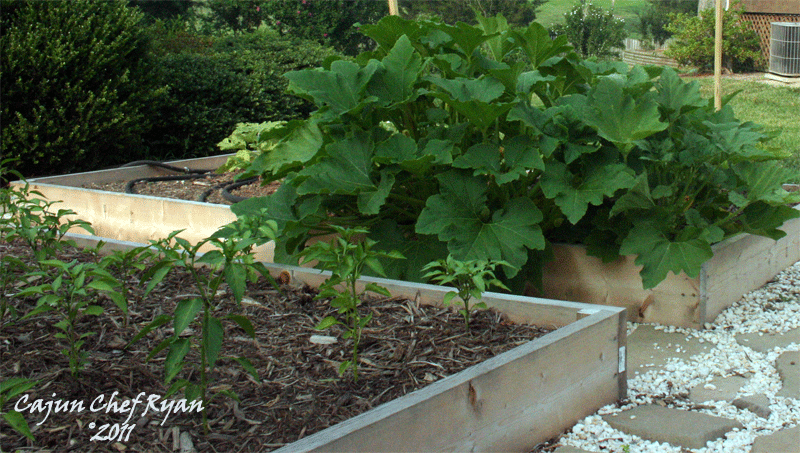
Patty Pan Squash Patch
Our little garden paradise has been busy working also, each plant feeding its own little tender vegetables with nutrients from the sun, soil, and water.
We always delight in what tiny surprises might be found, some are easy to see, and some are hidden from plain view.
But once the expedition is set out with our harvesting baskets and kitchen shears in hand, it takes just a little push of the branch, a twist of the vine, or a turn of the leaf in discovery of our new found edible delights.
The home garden in all its glory is starting to yield a bounty of produce, including the six patty pan squash plants. And the squash continue to grow into huge portions if left unpicked, as you can see in the photo of Monique picking the crop of several large squash ready for harvest.
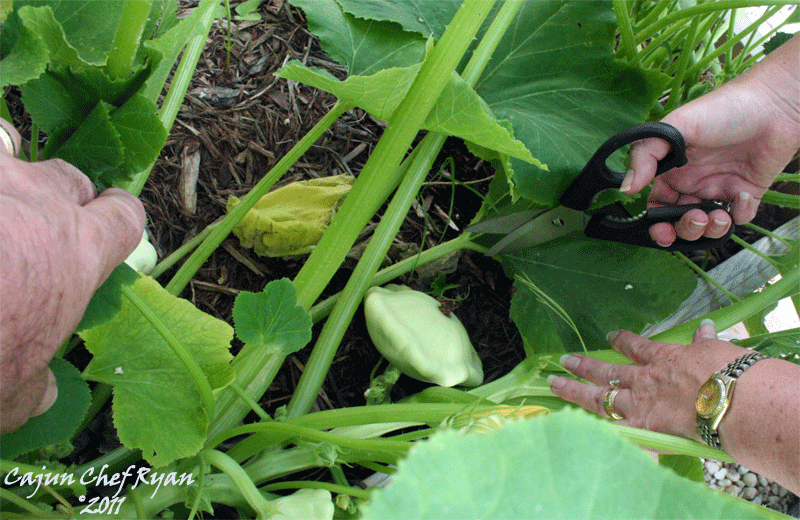
Harvesting Patty Pan Squash
These amazing squash cook down in no time at all, and take on the flavors of accompanying ingredients as in the case of the Cajun spices, bacon, onions,and garlic in this simple yet tasty recipe.

Patty Pan Squash, ready to prep and cook.
|
|
| Ingredients |
| 2 |
Medium |
Patty pan squash, sliced |
| 4 |
Strips |
Bacon, diced |
| ½ |
Cup |
Red onion, julienne |
| 4 |
Cloves |
Garlic, minced |
| 2 |
Tsp |
Cajun Spice Blend |
| 1 |
Tsp |
Garlic Salt |
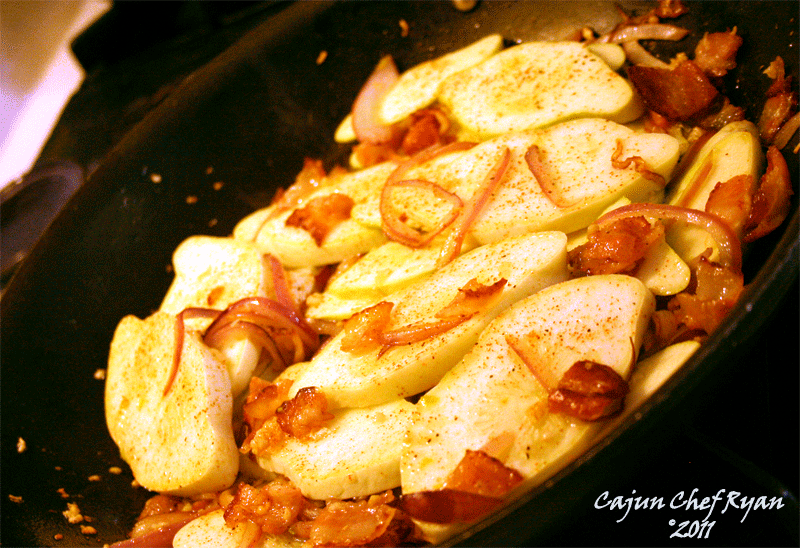
Pan Sautéing the Patty Pan Squash.
|
|
| Procedure Steps |
| 1. |
Have all the ingredients ready and prepped as described in the ingredient list. |
| 2. |
Heat a large sauté pan over high heat and add the diced bacon. Stir on occasion and render the fat from the bacon. Once crispy, add the onion and sauté for just a few minutes. |
| 3. |
Add the patty pan squash, and minced garlic, and season with the Cajun spice and garlic salt. Toss well or turn with a spoon to get even cooking throughout the squash. Continue to sauté until the squash is browned and softened. |
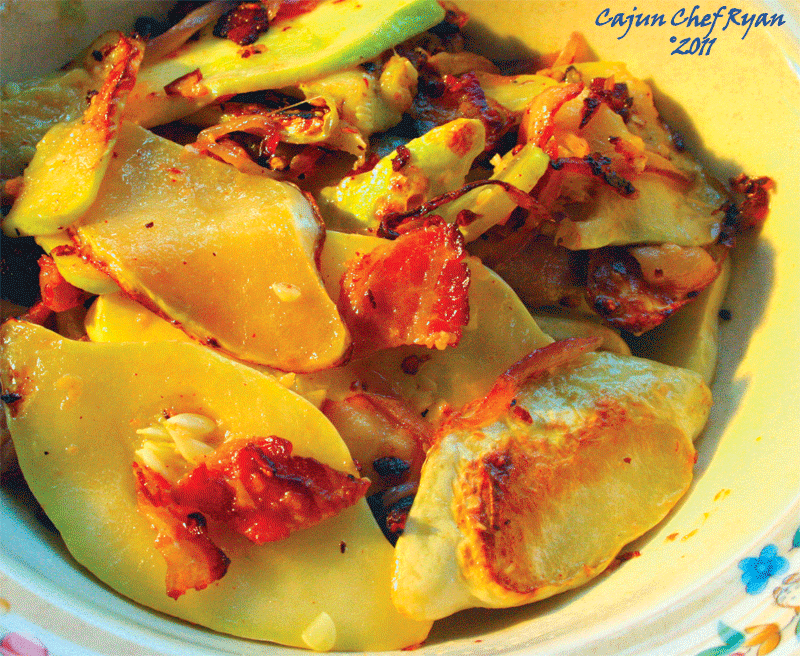
Ready To Serve Sautéed Patty Pan Squash
Dinner is served!
Along with the patty pan squash are fresh beets and Swish chard from the garden as well. The only thing on this plate that was not from our garden is the bacon, red onion, salt and spices.
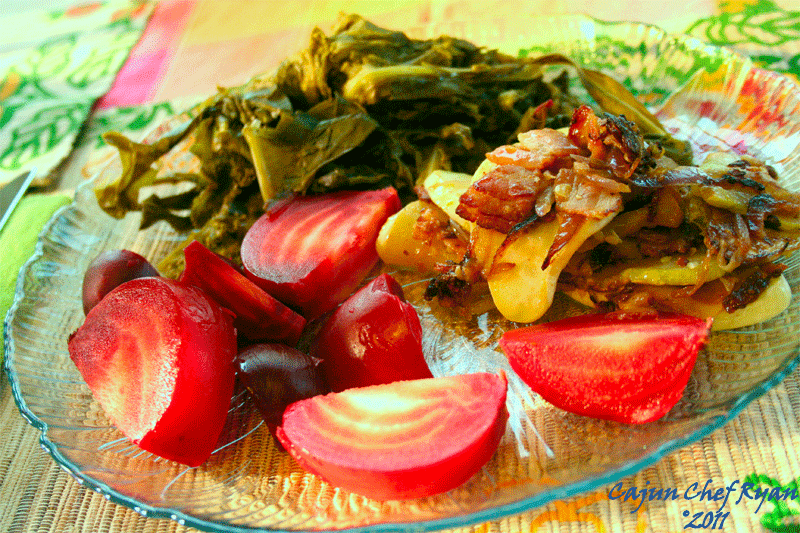
A plate full of garden goodness!
Bon appétit!
CCR
=:~)
©2011 CCR
Tags: Recipes
Beware: That Killer Food
Wilhelm is sitting down to enjoy a peaceful lunch with family and friends at the local neighborhood corner restaurant. Everyone is enjoying a light meal, lively conversation, and in particular he is noshing on a stylishly prepared salad of fresh baby oak leaf lettuce, arugula, baby spinach, grape tomato halves, Greek olives, and sprouts. All is well in the world of culinary bliss restaurant entertainment and dining pleasure!
Two days later Wilhelm is admitted to the central hospital with violent internal hemorrhaging and intense stomach pains, initial tests show E. coli bacteria has entered his digestive tract system, three days later Wilhelm’s body can no longer fight the infection and dies due to the rare O104:H4 strain of enterohemorrhagic Escherichia coli (EHEC).
Every time national or international news stories shatter the headlines about food-borne illness outbreaks this issue comes to the forefront again and again. The latest E. coli outbreaks in Europe resulting in 3,406 illnesses and the deaths of 39 people underscore the sad state of food safety in our modern industrial societies today.
According to the United States Centers for Disease Control (CDC) of the more than 76 million estimated food-borne disease cases annually, 325,000 people are sent to hospitals every year for food-borne related illness, and of those cases more than 5,000 will die due to complications that arise from contaminated food. We are our own worst enemy, yet we seem to continue living with blindfolds over our eyes, keeping our heads buried in the sand, sweeping any vestige of food related illness and death under the proverbial carpet.
Modern Science to the Rescue
Modern agriculture marvels at the prospect, harvesting vast quantities of mass produced fruits, vegetables, and animal protein, keeping prices low, and transporting them to markets thousands of miles away. Profit margins vary from animal product to produce, but the huge scale and quantity of output makes up for any slim margins. For example, a tiny edge of just a 1% profit margin on a particular item that yields 300 million pounds of saleable product per year, and let’s say it is sold at $1.00 per pound, the resulting net will line the pockets of the corporate machine with 3 million dollars profit on that one crop. While this is a simple analysis, you get the picture; small margins are okay when the vast quantity produced still yields huge returns. Even if the return is a mere 0.5% profit on this same crop, the net return is still $1.5 million dollars.
Now, take this simple generic analysis above and apply it to the overall 5.67% profit margin posted in March of 2011 that Fresh Del Monte Produce (Stock: FDP) reported, along with their net income of $29.9 million, all those zeros start adding up. I am only using FDP as an economic example of the very successful agriculture business model and money making machine that exists today.
What does it really cost?
But there are other costs that do not factor into the bottom line for agri-business operating budgets, profit margins, and stockholders dividends. These costs are not measured by business outcomes, but by the costs that society pays for the privilege of being able to buy food products from around the world at relatively reasonable costs.
How does it cost you in ways other than price?
- Flavor
- Taste
- Nutrition
- Quality
- Safety
- Knowing where you food comes from
All these add up to costs that we have been willing to pay without question…until recently.
How many times have you come home from the grocery with pears that are hard as a rock and never seem to ripen, when they do feel soft they seem to have become rotten.
How about limes that you bought for extracting some juice, only to find they are harder than bricks with skin thicker than an elephant and yield only minimal drips and drabs of liquid.
How about that package of live fresh basil in the refrigerated section, only to come home and find out that it was never to be chilled in the first place and then the leaves turn black because the product was miss-handled during shipment and display.
Today’s apple is not your grandfather’s apple!
Did you know that in 1903 there were thousands of species of vegetables that have since gone extinct? In fact, there used to be 487 known varieties of lettuce, today there are only 36. Almost 96 percent of the commercial vegetable varieties available over a hundred years ago are forever lost from the gene pool today, according to the 1997 World Resource Institute report Agrobiodiversity Loss: Conflicts and Effects.
Did you know that along with the loss of diversity of vegetables and produce we have also lost quality? A report from the ETC in November 2009, Who Will Feed Us:- Questions for the food and climate crisis, tells us that the nutritional content of many grains and vegetables today has dropped between 5 and 40 percent, which means that we have to eat more calories to get the same nutrition. It is no wonder we are growing in our waist lines. Today you have to eat two apples to get the same nutrition that an apple provided a hundred years ago.
Is this the law of diminishing returns at work on our crops?
What does this all mean?
According to the letter to nature Productivity and sustainability influenced by biodiversity in grassland ecosystems published in 1995, as forms of biodiversity are eroded, food security can also be reduced and economic risks increased. Evidence indicates that such changes can decrease sustainability and productivity in farming systems. Loss of diversity also reduces the resources available for future adaptation.
What it means to me?
Homesteading, growing and producing my own vegetables and protein sources, I know where the food comes from and how it was handled. I have control over what goes into the meals we prepare, going from front yard to kitchen table.
But it’s more than just that, it’s reducing our carbon footprint, it’s about going back to the land, and it’s about returning to a simpler way of sustaining our lives.
My father grew up on a farm with his brothers and one sister near the town of Morse in Acadia Parish located in south central Louisiana from the late 1930’s to the early 1950’s and were able to live sustainably with cows, pigs, chickens, ducks, corn, and a large vegetable garden. Their main source of income resulted from annual crop rotations of soybeans and rice. The agricultural way of living may have to come full circle, and I see it in my future.
I’ve started my homesteading with expanding my garden tenfold this season; you can read about that in my previous post Cultivating Your Life!
Bon appétit!
CCR
=:~)
©2011 CCR
Tags: Sustainability
“I’m your biggest fan; I’ll follow you until you love me!” – Lady Gaga
Okay…I know what you are thinking…what does this lyric, a line from the pop song Paparazzi have to do with this blog post?
How many ways can you say it?
What does it mean?
A. A salad in your front yard!
B. Fresh organic best tasting vegetables beyond imagination!
C. Saving money on your grocery budget!
D. Controlling exactly what feeds your family!
E. From front yard to table!
F. Cooking and eating exotic vegetables at a reasonable cost!
G. All of the above!
WARNING: Get yourself a cup of coffee or a nice hot tea and scones with Devonshire cream. This is going to be a rather long post!
I could break it up into several smaller posts, and take advantage of getting more clicks, page views, Stumbles, Facebook views, etc, etc…but that is not my real intent with the CCR blog anymore. If I can influence just one more person in the world, then I feel my online efforts are worthy!
Set the Wayback Machine to Date: April 18, 2010
Standing outside sporting an old baseball cap, safety sunglasses protecting my eyes, my old Corona beach turned gardening shirt, workout shorts, gardening gloves and cross-training hiking boots on, I stare at the front yard, the green lawn, and consider how all of these tiny blades of grass need so much attention, water, fertilizer, food, mowing, trimming, but in the end, yield no real rewards. I cannot eat the grass, what does it really do for me?
The south facing front yard gets most of the sunlight during the day, over six hours of “soleil” in the shaded areas, and up to eight and ten hours in some areas, enough for just about any vegetable to thrive.
With metal can in hand and tilted over, the cap off and tank empty, filled up the tiller with some 87 octane, set the choke to full and pulled the cord starting up the two-stroke engine. Reset the tine level to lowest setting, ambled the tiller to the marked location and began mixing up the sod and soil until the ten foot by ten foot grassy area was transformed into a new garden plot. This was in the spring of 2010.
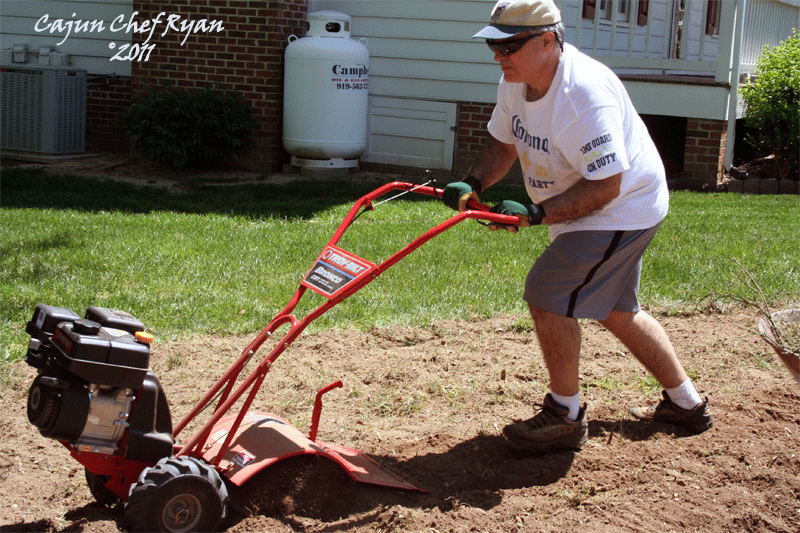
Breaking new ground! Ryan sweating and tilling!

Measuring out the raised bed locations on the new tilled plot.
The new front yard garden in 2010 doubled our growing capacity from the container gardens of previous years growing three varieties of heirloom tomatoes with twelve plants on average. In 2010 our expanded garden included eight tomato plants, two yellow squash, two zucchini, two arugula, one cucumber, two Japanese eggplant, two Anaheim pepper plants, and two green bell pepper plants. Last year we harvested over fifty pounds of cucumbers from the one plant, at least 100 pounds of tomatoes from four Super Sweet 100 and four Roma plants, two heads of lettuce, at least 20 pounds of eggplant, and possibly 10 pounds of peppers.
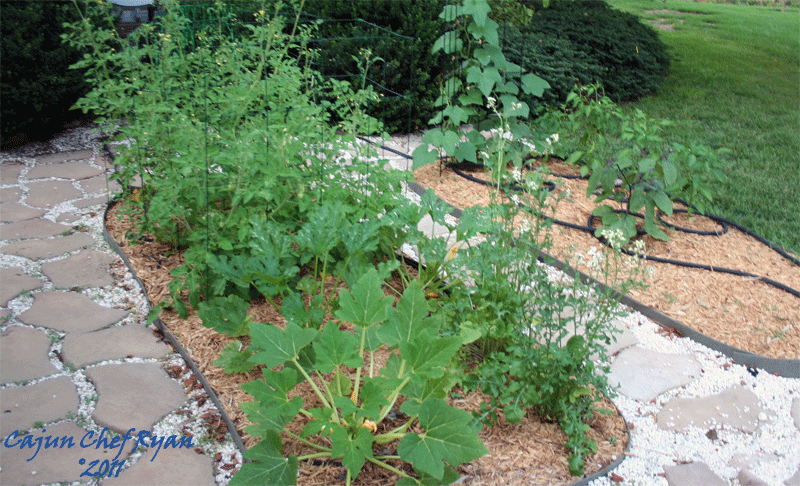
Front Yard Garden June 2010
Fast forward to late winter 2011…
During the cold winter months of January and February of this year, I started cracking open and reading several gardening books in my library, and online in preparation for the expansion in 2011. Using the seed starting chart from Organic Gardening online, I devised my plan!
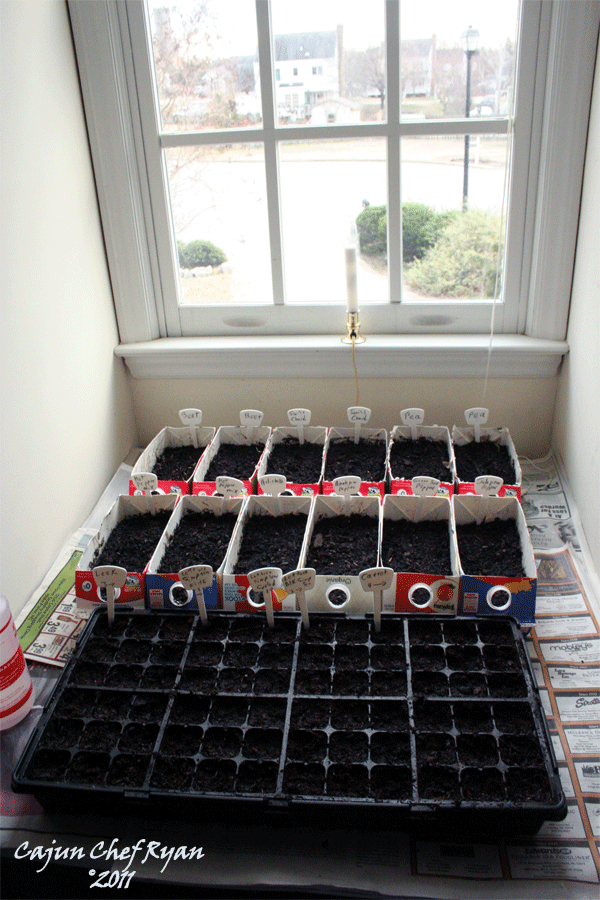
Grow your own seed starting trays
Date: February 13, 2011
Started seeds indoors in soil blocks using recycled milk containers and a seed starting tray used from previous years, all set on a riser below a south facing window.
- Beets
- Swish Chard
- Peas
- Hot Pepper Mix
- Artichokes
- Green Bell Pepper
- Jalapeno Pepper
- Leeks
- Simpson Lettuce (Two varieties)
- Carrots
Germination times vary, but within seven to ten days sprouts started to appear in several of the blocks. And after a month all of the seedling’s were taking on great form.
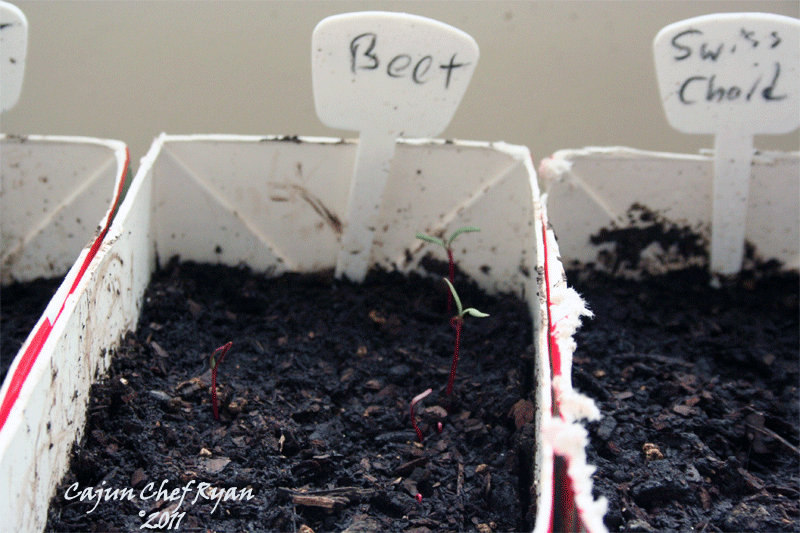
Within seven to ten days sprouts started to appear in several of the block

One month later seeding’s are maturing
Date: March 13, 2011
One month after starting seeds indoors the seedlings are grabbing the available light.
Also added other seed starts and transplants including:
- Beefsteak tomato
- Super Sweet 100 Cherry Tomato
- Roma Tomato
- Green Onions
- Spearmint
Finally found and learned a great new technique for making homemade newspaper pots for starting seeds, and is an improvement from the soil blocks when it comes time to transplant the seedlings to larger pots.
Transplanted seedling starters into larger pots and recycled 16-oz plastic drinking cups, allowing roots to expand and plants to continue growing indoors with limited sun exposure for hardening off before going outdoors full time.
Lessons learned from the first set of transplants are to fit eight of the soil filled newspaper pots into each milk carton tray in lieu of making soil blocks. The seedlings are harder to transplant from soil block to larger individual pots.
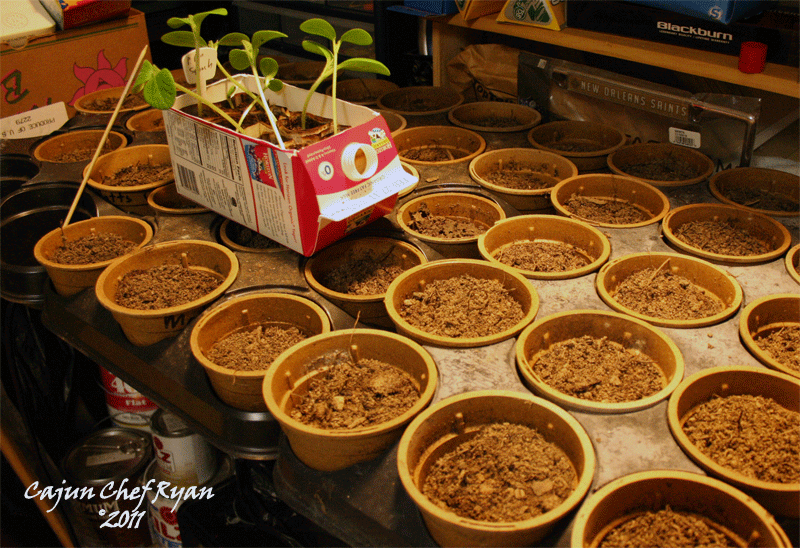
Transplanted seedling starters into larger pots.
In case you are not keeping up, we are not just doubling our garden size this year; it is more like a fifteen fold increase in our square footage and total growing capacity when adding in the new back yard project (more on that later). This might explain why you don’t see me online the Internet as much the past few months.
Did I also mention that other benefits of gardening include the great exercise you get from humping loads of dirt and mulch with shovel and wheel barrow?
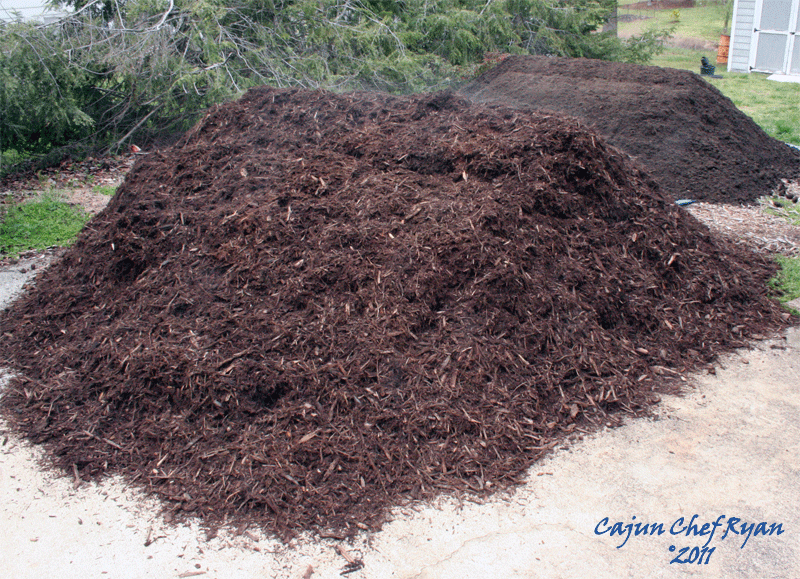
Six yards blended soil and eight yards mulch.
Notice the steam coming off the top of the mulch, this stuff is alive! Six yards of blended garden soil mix, and eight yards of triple blended mulch. We got a second load of the triple blended mulch, six yards in the repeat delivery to extend paths around the yards.
The front yard garden today!
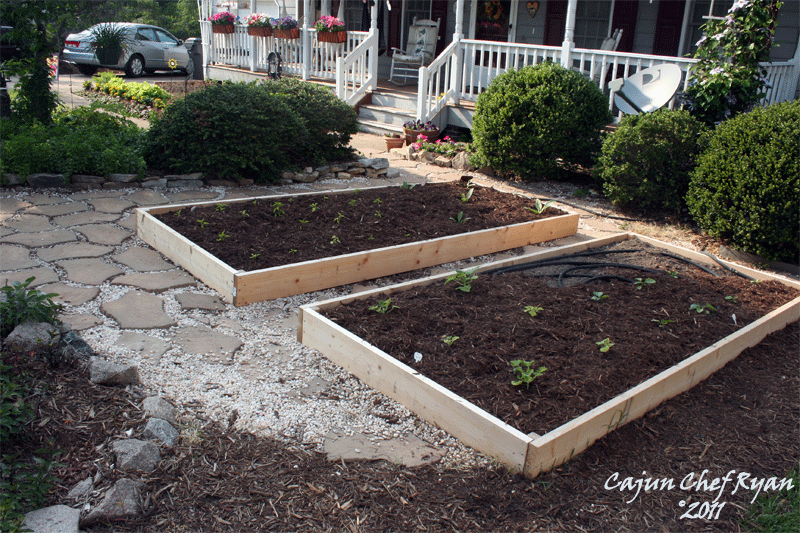
Front yard expanded raised beds
Transformed the original four-inch raised beds to eight inches using 8”x2”x10’ dimensional lumber utilizing a simple plan from the book The Vegetable Gardener’s Bible.
Planted 5 artichokes, 22 hot pepper mix, 6 patty pan squash and 7 eggplants so far in the two raised beds, and there is still room for several other plants on the side of the eggplants.

Artichoke and Hot Pepper Mix plants
Doubling the Front Yard Growing Area The best is yet to come…

Removing the shrubs March 2011
I called my tree service professional Roberto the owner of Yukon Tree Service and asked if he could remove my shrubs from the front area of our yard and he said for $200 it could happen. So we lined it up and on Tuesday, March 15 he and the crew came out with the Bobcat and forty-five minutes later we had a new plot in the front yard. This area measures 10”x20”, and creates three separate growing areas, more than doubling the raised bed space from last year’s beds.
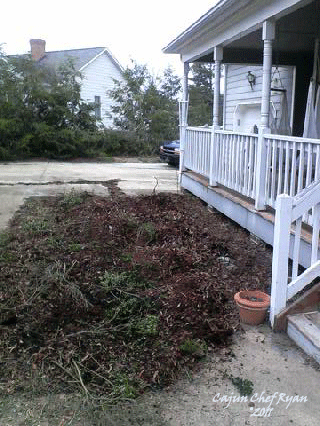
Shrubs are all gone
All the shrubs are removed and an empty bed remains. Like the artists empty canvas, this newly emptied plot of previously unproductive landscaping will be transformed into a beautiful work of edible art.
Here is how the new front area looks today!
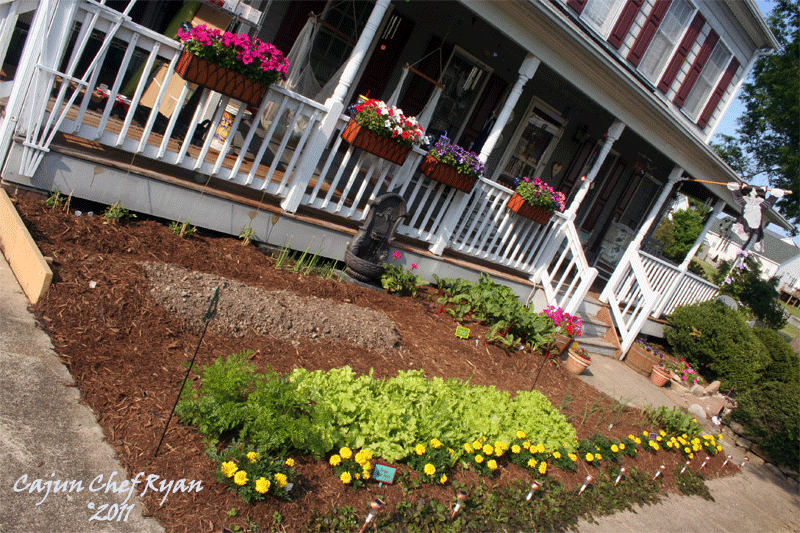
Now that is one transformation!
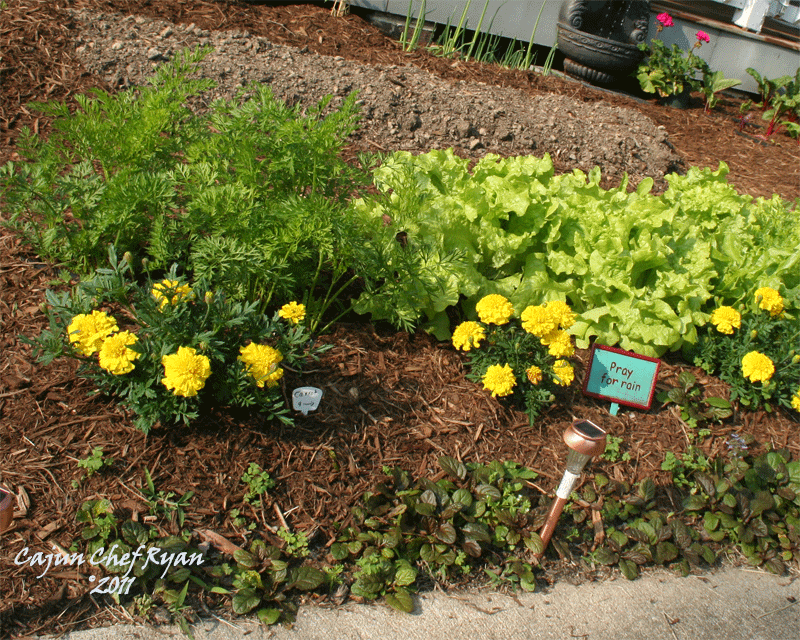
Carrots and Simpson Green Leaf Lettuce
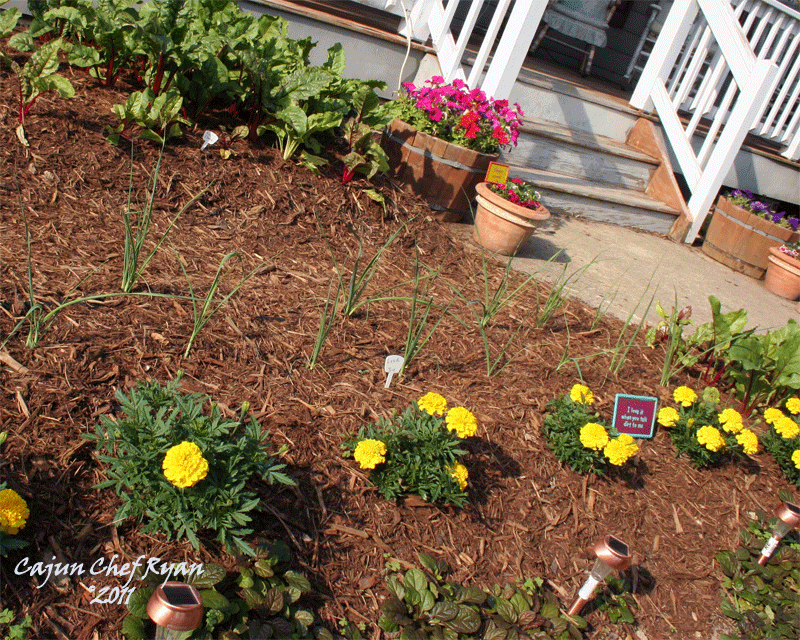
Leeks and Beets in front and Swiss Chard in the back
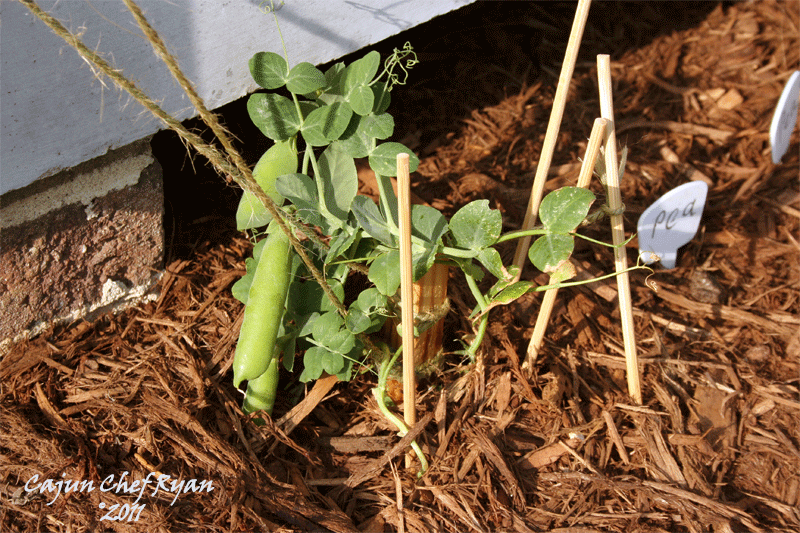
Peas
The Marigolds not only add beauty, but they keep the bugs away from all the nice vegetables in training.
We have already harvested several heads of lettuce and fresh peas for amazing salads.
Stayed tuned as I fill you in on our back yard garden projects! They include a 40’x20’ wildflower garden plot with a fire pit in the center, two peach trees, two fig trees, and more raised vegetable beds with tomatoes, corn, okra, Kentucky Blue Beans, Arugula, Wild mix lettuce, sunflowers, cucumbers, and more.
Bon appétit!
CCR
=:~)
©2011 CCR
Tags: Sustainability
Cinco de Mayo 2011 is today and it seems to be a holiday that is growing in popularity every year, especially among foodie blogger’s, they are now jumping on the band wagon as well. Recently in the past week I have seen several of them creating some very interesting "Mexican" dishes.
Having worked in a management role for a Mexican theme restaurant company in Louisiana and Mississippi during the time period from 1995 to 1998, Cinco de Mayo was always one of our busiest days of the year, and we made every effort to capitalize on that fact. Typically we would hire a band, offer dollar margarita specials, dollar Coronita specials, and dollar taco specials. We would have activities such as tortilla tossing contests, pinatas for the children, and many more fun things for our patrons to do as a way of keeping them in the establishment longer, and of course to spend more money, and make us all rich! Actually, the only people getting richer were the servers and bartenders with the extra tips earned, and the owners. The managers worked extra hours that week and still got their same pay, no change there, just lack of sleep and long hours on the feet! Ouch!
Here in Wake Forest our favorite Mexican restaurant is Las Margaritas, they offer a great setting with wonderful Mexican fare, and some of the best margaritas. One of our cousins from Houston visited several years ago and said that Las Margaritas was just as good as some of the best Mexican restaurants in her area, and that really means something coming from an area that has some of the best southwest and Mexican fare in the US of A.
No new recipes here, just my list of thirteen recipes that have been added to the "Mexican" category over the three years that CCR has been on the web.
Saturday, May 7, 2011 marks the three year anniversary of the CCR blog!
You can see where it all started by reading my very first post Welcome to Cajun Chef Ryan and my Blog!
To celebrate both Cinco de Mayo and the CCR third birthday I put together this list of thirteen Mexican and southwest influenced dishes that have been shared over the years! Ole!
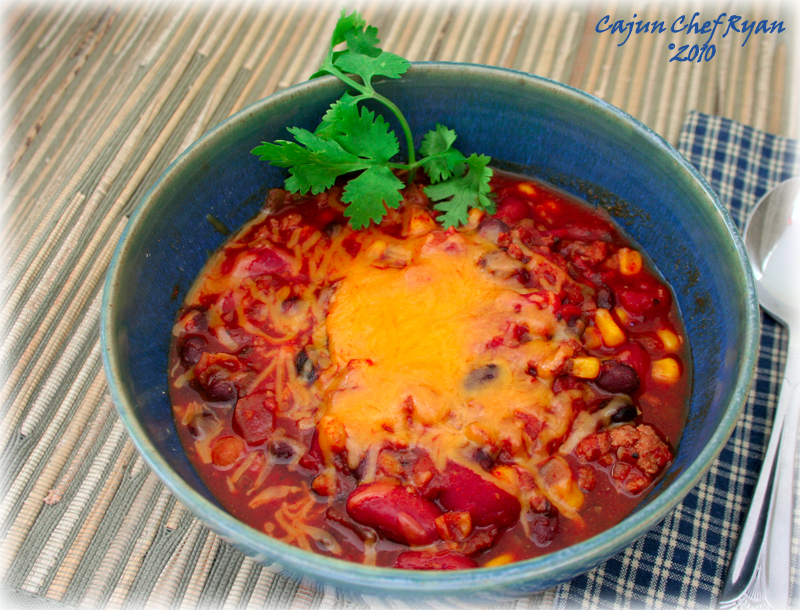
Three Bean and Corn Turkey Chili
This is another crock pot slow cooker recipe that is sure to please any chili fan! Quick and easy to prepare, just add the ingredients to the crock pot and in about six to eight hours on medium heat you are ready to eat. I used a pint of my Fire Roasted Tomato Sauce for this recipe, and if you have the time or have some on hand this is a great sauce, if not, then 2 cups of other tomato sauce will suffice…I guess!
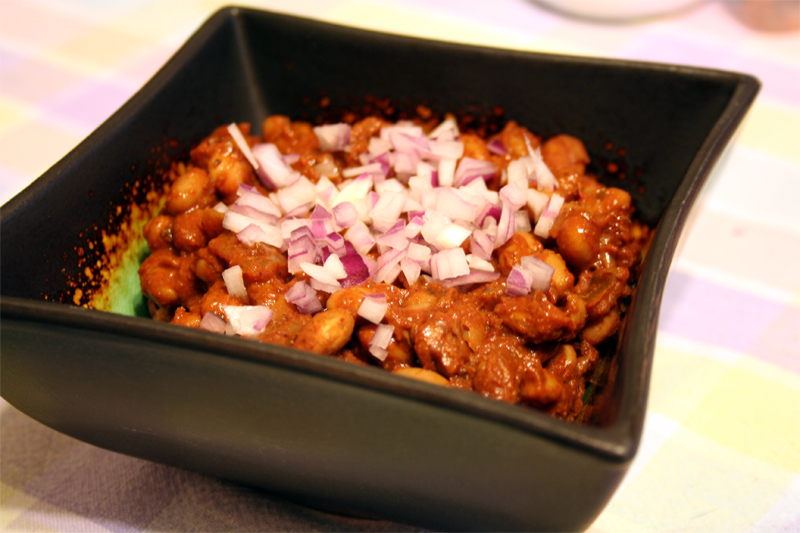
Slow Cooker Chili Beans
Each week I have taken on a new slow cooker bean dish and this time around we used two pounds of pinto beans to create a vegetarian chili, and loosely based on one inspired from the the book American Whole foods Cuisine, by Nikkie & David Goldbeck, and found on page 43 from the short-order cooking chapter in the hardcover, 1983 edition, this chili recipe also fits in with the Eat To Live dietary guidelines with no oil, fat, or sugar added.
Guacamole
Guacamole is one of those base master type recipes that can have endless variations, and indeed I was able to create one that fits in with the Eat To Live diet. Meaning, no added fats or oils, and no added salt. In fact, we all agreed that this batch was one of the best tasting guacamole’s I had ever made.
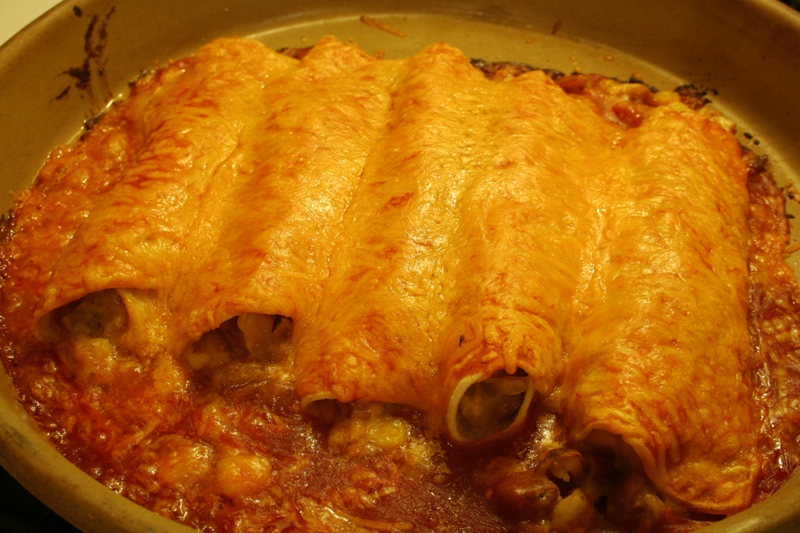
Bean and Corn Enchiladas
Lately I have been on a trend of making my own breads, snacks, and now with this recipe I made my own tortillas for this enchilada recipe. Eventually when the jar of store bought mayonnaise runs out I will start making my own mayo in small 2-cup batches, besides saving a lot on the grocery bill, I also know what ingredients are in my preparations. No more partially hydrogenated fat for us! The pan of baked enchiladas shown on the left are some of the extra that did not fit in our other baking dish, these looked great on their own!
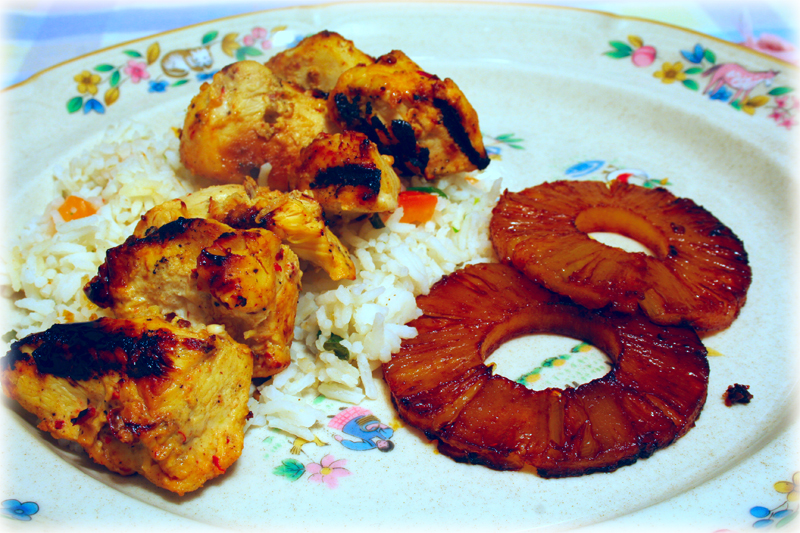
Chipotle Chicken Kabobs with Spicy Grilled Pineapple
This recipe has chipotle peppers in adobo sauce as part of the marinade with the yogurt, giving it a southwest flavor, but the addition of yogurt also gives this chicken an Indian and middle-eastern flair as well. Each kabob served with a bed of basmati rice and a couple grilled pineapple rings.
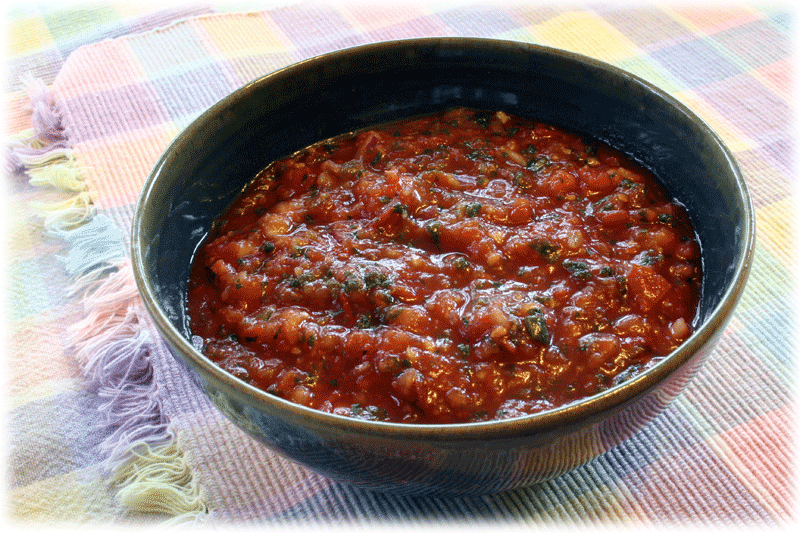
Salsa Recipe
This salsa recipe is actually more like a cross between pico de gallo and salsa in that it is quite thicker than your normal salsa, but wetter than your typical pico. I love chunky salsa and the addition of the green chilies adds a small touch of mild heat that otherwise was not there before. Still, my favorite part of the recipe is the cilantro; I can never seem to get enough cilantro.
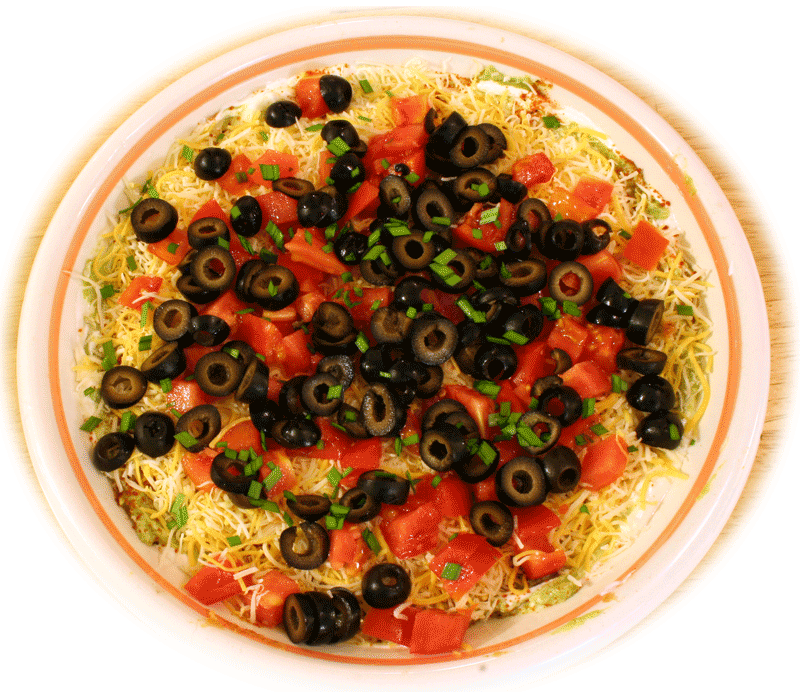
Layered Taco Dip
This version of taco dip includes Frito Lay brand bean dip, mayonnaise, sour cream, taco or Southwest seasoning (I used my own Finger Lickin’ Rub spice), guacamole, shredded Mexican four-cheese mix, diced tomatoes, sliced black olives, and fresh chopped chives. Therefore, if all the ingredients were considered a separate layer then you could call this a twelve-layer dip, but I will keep the numbers out on this one. What I would call physical layers in this dip is actually much less than that and more like half that amount. Enough on the layer debate, lets get to the recipe now.
Southwest Scramble
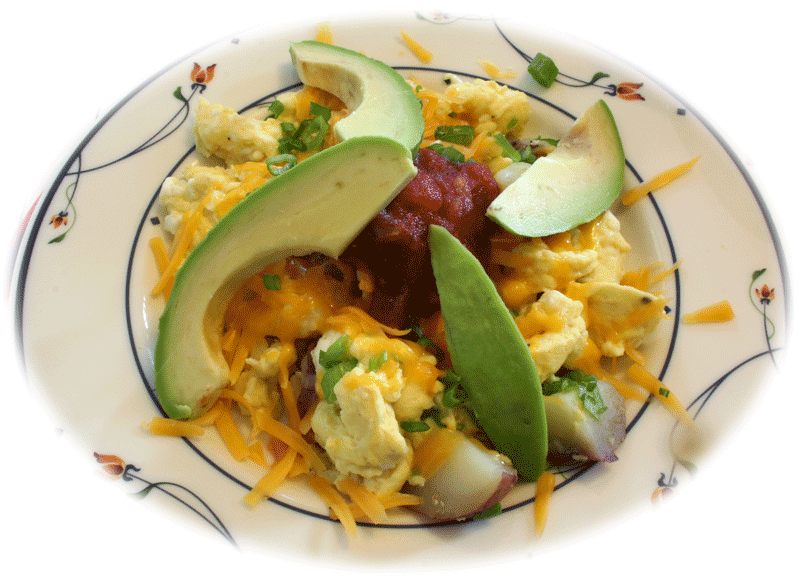
No matter the time of day, eggs have an appeal that transcends all meals and just about every occasion. We enjoyed a batch of salsa and avocado laden scrambled eggs with shredded cheddar cheese, quartered new red potatoes, and a sprinkling of chopped green onions.
Chicken Tortilla Soup
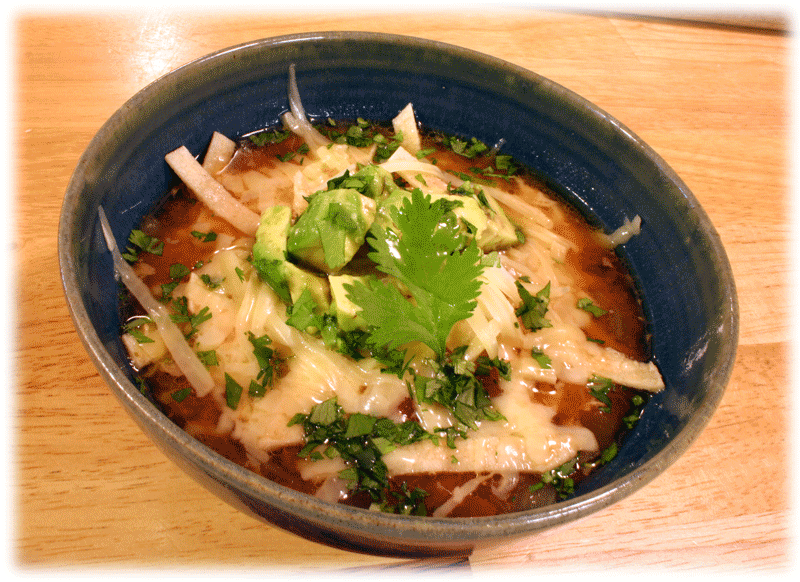
Another slow cooker recipe and this version is a broth variety of the ubiquitous chicken tortilla soup. Boneless skinless chicken thighs, chicken stock diced tomatoes, green chilies, cumin and onions start the recipe off on the low setting for 6 to 8 hours. Then the seasoning adjusted with salt and pepper. Once ladled into bowls the soup ends up garnished with thin corn tortilla strips, diced avocado, shredded Monterey jack cheese and fresh chopped cilantro to finish.
Jalapeno Poppers
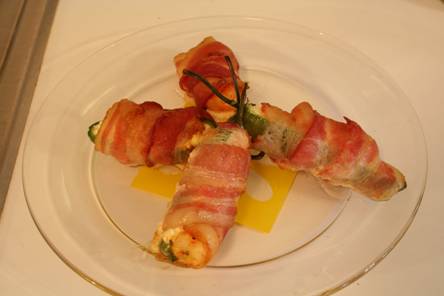
While I cut and de-seeded the jalapeno’s Ben peeled the shrimp and I let the cream cheese soften up a bit. Once the shrimp were done I tossed a little of my “Finger Lickin’ Rub” spice mix on them and let em sit for a bit to marinate. What follows is a very close version of the poppers that Julius made on that fantastic day, and recreated just one day later in our kitchen.
Chicken Enchiladas
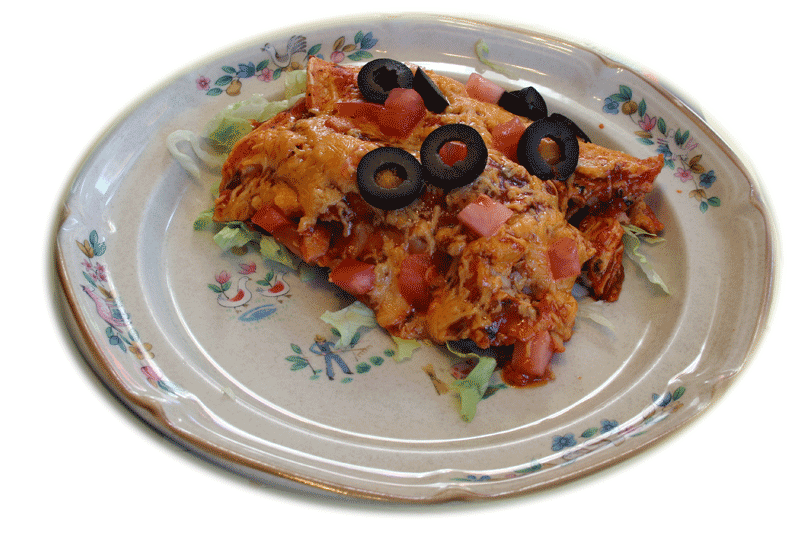
The recipe has become a family favorite since we first made it in 2001 when Monique bought a copy of the Weight Watchers Magazine Six O’Clock Solutions cookbook. Found on page 49, this recipe for chicken enchiladas is quick, easy and for those who follow the Weight Watchers points system each one is only 6 points. The original recipe calls for 8 servings; however, with doubling it I was able to actually yield 20 enchiladas, so the points per enchilada will actually be a bit less than stated. Essentially this changes the recipe from 2.5 ounces of chicken per enchilada to just 2 ounces each.
Chiles Rellenos
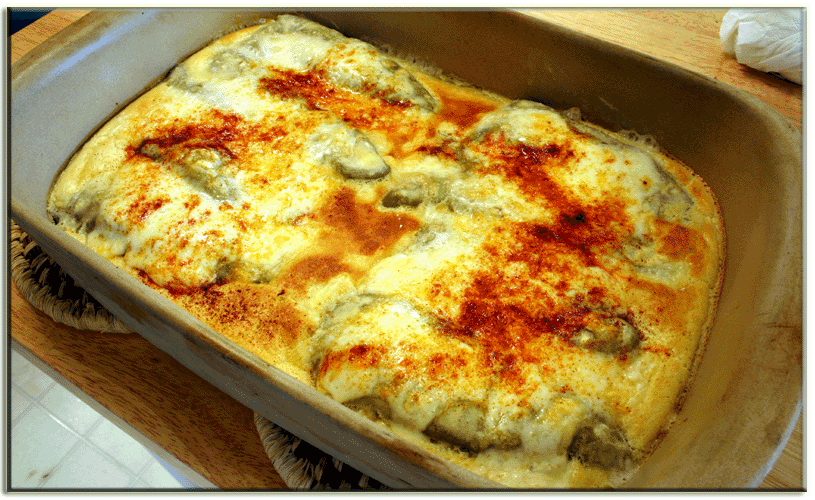
One of my all time favorite American Southwest dishes is the sublime chilies stuffed with jack cheese surrounded by the light and fluffy batter then fried and typically served with a cheese or tomato sauce. My variation is an easy casserole and served with a warm Salsa Verde, or a green tomatillo sauce.
Vegetable Quesadilla’s
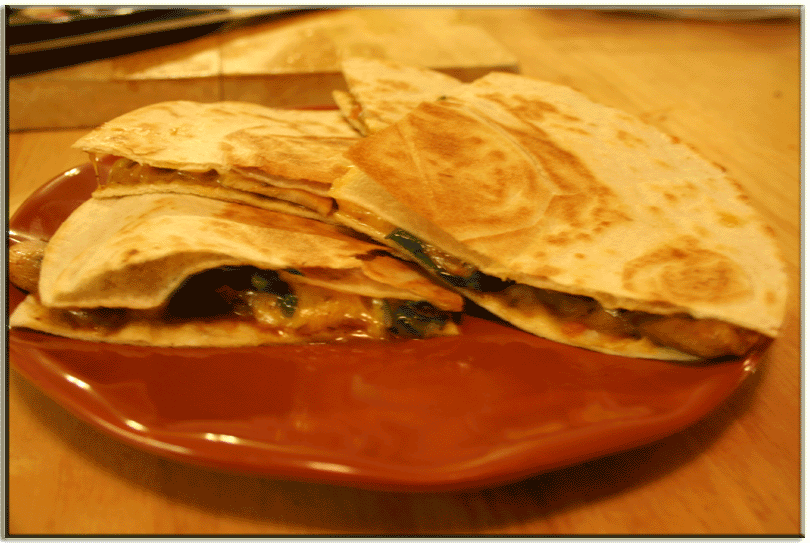
We really wanted something quick and easy last night so I whipped up some of these Vegetable Quesadilla’s for the three of us. Only about 30 minutes from prep to sitting at the dinner table too, this is a really quick and easy way to enjoy the southwest favorite. I stuffed some extra vegetable filling into these three that I made, but the recipe is written to yield 4 servings.
Bon appétit!
CCR
=:~)
©2011 CCR
Tags: Mexican