September 24th, 2009 · 12 Comments
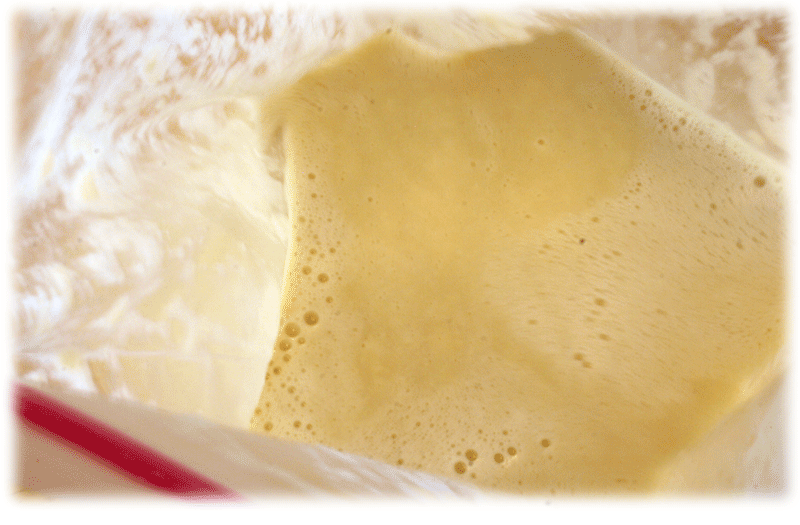
If you have ever received a bag of leavening batter starter from a friend along with instructions to either mush the bag or stir the batter for 10 days, then you are part of the Amish friendship bread experience. I got my batter from my friend and boss Liz Cheek who got hers from her daughter, I have a batch ready to give out and who knows who they will eventually pass along some of the starter to. Now after 10 days two of the folks who received our starter made batches of the bread last night and now a whole new round of bread and starters are making their way to more folks. (NOTE: Click on images for a larger view.)
If, however, you have never received such a batter gift, then it is your lucky day as I’ve got the recipe here and a link to make your own starter too!
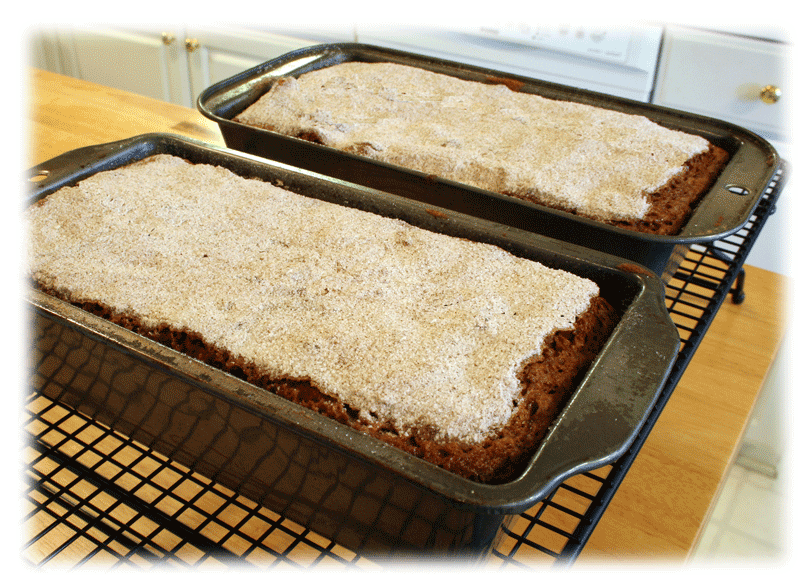
Parts of the instructions tell you that if you keep a starter for yourself, you will be baking this bread every 10 days. The bread is quite good as Liz gave me a sample before I got my starter bag, and it makes for a great gift too! Our first batch was a hit, Monique shared some at her work and passed along some starters there too. The instructions that I got state that only the Amish know how to create the “starter”, but a quick Internet search will result in a few of the starter recipes which includes yeast, and I’ve linked to one here that matches the similar ingredients of the batter in this recipe.
Here is the recipe and instructions as given to me with my starter batter:
DO NOT use any type of metal spoon or metal bowl for mixing.
DO NOT refrigerate the starter batter.
When air builds up in the bag, let it out. It is normal for the batter to rise, bubble and ferment.
Day 1 Do nothing – date the bag
Day 2 Mush the bag or stir the batter
Day 3 Mush the bag or stir the batter
Day 4 Mush the bag or stir the batter
Day 5 Mush the bag or stir the batter
Day 6 ADD to the batter: 1 cup all-purpose flour, 1 cup granulated sugar and 1 cup milk then mush the bag or stir well
Day 7 Mush the bag or stir the batter
Day 8 Mush the bag or stir the batter
Day 9 Mush the bag or stir the batter
Day 10 Follow the directions below for separating out the batter and baking two loves of bread.
Instructions:
- Pour the entire contents of the bag or batter into a non-metal bowl.
- Add 1 ½ cups granulated sugar and 1 ½ cups milk and mix well.
- Measure out 4 separate batters of 1 cup each into 1-gallon freezer bags.
- Mark each bag with the date. Keep a starter for yourself and give the other 3 away to friends along with a copy of this recipe. Should the bags not be passed onto friends the first day, be certain to tell them what day the bag is on.
- Preheat oven to 325° F.
- Add to the batch of batter you are keeping for yourself the following:
|


|
| 3 |
Each |
Eggs |
| 1 |
Cup |
Sugar |
| 1 ½ |
Tsp |
Baking powder |
| 2 |
Cups |
Flour |
| 1 |
Cup |
Oil |
| 2 |
Tsp |
Cinnamon |
| ½ |
Tsp |
Baking soda |
| 2 |
Boxes |
Instant vanilla pudding |
| ½ |
Cup |
Milk |
| ½ |
Tsp |
Vanilla |
| ½ |
Tsp |
Salt |
- Grease 2 large loaf pans, mix an additional ½-cup sugar, and 1 ½ tsp cinnamon. Dust the loaf pans with half of the sugar mixture.

- Pour the batter evenly into the loaf pans and sprinkle the remaining sugar mixture on top of the batter.
- Bake for one hour or until a toothpick test for doneness comes up dry. Cool on a wire rack until loaf loosens from the pan evenly, about 10 minutes.
Optional: Add 1 cup chopped nuts, 1 cup dried blueberries or 1 cup dried cranberries or a combination of all three to batter just before baking.

Tags: Baking · Breakfast · Desserts · Recipes
September 23rd, 2009 · 11 Comments
Fricassée De Poulet À L’Ancienne (Old-fashioned Chicken Fricassée with Wine-flavored Cream Sauce, Onions, and Mushrooms)

For an early birthday present Monique brought me to Barnes and Nobel after lunch on Friday and proceeded to walk me down to the cookbook section and after some cruising around, we finally found our spoils. The latest edition of “Mastering the Art of French Cooking” by Julia Child. With all the hype the past few months surrounding the movie Julie and Julia I wanted to get a new copy of her master volume to compliment the collection, I have had her “The Way to Cook” since the early 1990’s. It was definitely time to compliment the library with Julia’s magnum opus. I believe that my mom still has an original copy of ”Mastering the Art…” on her kitchen shelf and I could never convince her to give it up! (Note: Click on images for a larger view.)
While perusing from the very beginning, it reminded me of passages in the movie, and the feeling compelled me to try one of her recipes so I chose to make a chicken fricassée. Which I knew would be in Julia’s book since it is a classic French culinary and traditional preparation. JC’s version found on pages 258 – 261 also offers several variations on the theme, for example, the addition of curry powder to the chicken sauté step creates a curry sauce known as Fricassée De Poulet à l’Indienne, or Indian Chicken Fricassée. Now I have made my share of chicken fricassée having also eaten it often while growing up, served in many a New Orleans kitchen worth their Cajun or Creole salt, if there is such a thing.
With the exception of two departures, which I note later, I have kept the recipe as close to Julia’s original as possible. One of the great lessons when attempting recipes is to discover the points where changes, additions or omissions can occur or have occurred over time. Remember, the “Mastering the Art of French Cooking” recipes were originally written in the 1950’s and adapted from the Cordon Bleu for American home cooks; some things have changed over the past 40+ years. Of course, the esteemed culinary school has it roots in French cooking tradition, which can be traced back to those documented by Escoffier.
Going further back to Escoffier, who wrote “Le Guide Culinaire: A Guide to Modern Cookery”, the first English version was printed in 1907 with 5,000 recipes, he writes on page 487 of Part II:
1667 –Fricassée De Poulet À L’Ancienne
For a fricassée cut up the chicken as for sauté, but divide the legs into two. The procedure is exactly that of Fricassée de Veau (No. 1276) -that is to say, the chicken is cooked in the sauce.
About 10 minutes before serving, add 10 small onions, cooked in white consommé, and 10 small grooved mushroom-heads. Finish at the last moment with a pinch of chopped parsley and chives. Thicken the sauce at the last moment with the yolks of 2 eggs, 4 tablespoonfuls cream, and 1 oz. best butter.
Dish in a timbale, and surround the fricassée with little flowerets of puff-paste, baked without coloration.
Escoffier wrote in a very matter of fact manner and rarely repeated procedures or methods, so the reference to Veal (No. 1276) brings us to that passage on page 392 of Part II:
1276 – Fricassée de Veau
Fricassée differs from blanquette in this, namely, that the pieces of veal in the former are stiffened in butter without coloration.
When the meat has been well stiffened, besprinkle it with about 1 oz. flour per lb.; cooks this flour with the meat for a few minutes; then moisten the fricassée with white stock; season, and set to boil, stirring the while. All the garnishes of mushrooms and vegetables given for blanquette may be served with fricassée; but in the case of the latter, both the meat and the garnish are cooked in the sauce, the leason of which is effected by means of egg-yolks and cream as for blanquette.
In addition, here we go again, references to previously covered methods as with the blanquette, see where this is going, Escoffier builds techniques and preparations in a thorough and logical manner. The point being that recipes are changed or altered over the course of history, however, the fundamentals remain. Escoffier with the aid of others started documenting the French cuisine in the late 1800’s and is still a valuable resource some 114+ years later. My old copy of the Escoffier reference is collecting dust on the bookshelf, but opens periodically when I need to refer back to tradition.
Fricassée utilizes two types of cooking methods in the process of preparing the chicken, both sauté and stewing. Timing of the two cooking methods in the fricassée is important, because a sauté is quite the dry technique, where a stew is wet and includes liquid ingredients such as protein made stocks, broths, wine, and/or dairy products. This fricassée is an example of a white version, however, coq au vin utilizes red wine and then it becomes a brown sauce.
This preparation although a typical Sunday dinner repast and while not too difficult to prepare it does take some time to complete. The chicken pieces are sautéed in butter with mirepoix then flour and seasonings added to create sort of a roux mixture, and then covered with chicken stock and white wine for the stewing method. In Julia’s recipe, she has the seasonings put into a sachet of cheesecloth and removed later, where the preference in my version is to add them directly to the liquid in minced form; this is the first departure from the original. Once the chicken has stewed down for 30 minutes then the pieces removed and the sauce continues to simmer and thicken, however, at this point there is a departure from the original recipe. Julia instructs to strain the sauce, and therefore, removing the mirepoix, however, and this is the second departure, I prefer to keep the ingredients and blend them into the sauce liquid for added texture and flavor, thus also retaining the good nutrition of the onions, celery and carrots. Many traditional French sauce preparations required the straining step, which make for a smoother silky consistency. This is still especially true in the case for the béchamel sauce, which may be prepared with a roux and sometimes either mirepoix or just onions. A liaison of egg yolks and heavy cream incorporated toward the end of the preparation and the addition of braised onions and quartered mushrooms finish the chicken fricassée. This dish typically served with steamed rice, risotto, or buttered pasta or noodles as sides also benefits from a garnish of green vegetables such as lima beans, buttered peas or braised asparagus tips.
| Ingredients |
| 2 ½ – 3 |
Lb. |
Fryer Chicken, cut-up |
| 1 |
Large |
Onion, julienne sliced |
| 1 |
Large |
Carrot, peeled and sliced |
| 1 |
Large |
Celery stalk, sliced |
| 4 |
Tbsp |
Butter |
| ½ |
Tsp |
Salt |
| 1/8 |
Tsp |
White pepper |
| 3 |
Tbsp |
Flour |
| 3 |
Cups |
Chicken stock, warmed |
| 1 |
Cup |
Dry white wine |
| 1 |
Tbsp |
Parsley, fresh chopped |
| ½ |
Tbsp |
Thyme, fresh chopped |
| 1 |
Each |
Bay leaf |
| To taste |
Salt and white pepper |
| ¼ |
Tsp |
Lemon juice |
| 1 |
Pinch |
Nutmeg |
| 2 |
Tbsp |
Fresh parsley sprigs (optional) |
| Garnish |
| 1 |
Cup |
Onions, diced or 20 pearl onions, peeled |
| ½ |
Lb. |
Mushrooms |
| 1 |
Tbsp |
Butter |
| ½ |
Tsp |
Lemon juice |
| ½ |
Cup |
Dry White wine |
| Liaison |
| 2 |
Each |
Egg yolks |
| ½ |
Cup |
Heavy cream |
| Procedure Steps |
| 1. |
Be sure the chicken is patted dry with paper towels. |
| 2. |
 In a 10-inch or larger saucepan melt the butter over medium heat and add the onion, carrot and celery and sweat until soft and tender. Push the vegetable mirepoix to one side of the pan. Turn up the heat and add the chicken, turning every minute for 3 to 4 minutes until evenly stiffened slightly and to a light golden yellow. In a 10-inch or larger saucepan melt the butter over medium heat and add the onion, carrot and celery and sweat until soft and tender. Push the vegetable mirepoix to one side of the pan. Turn up the heat and add the chicken, turning every minute for 3 to 4 minutes until evenly stiffened slightly and to a light golden yellow. |
| 3. |
Lower the heat and cover cooking for 5 minutes, then turn the chicken once, cover and cook another 5 minutes. |
| 4. |
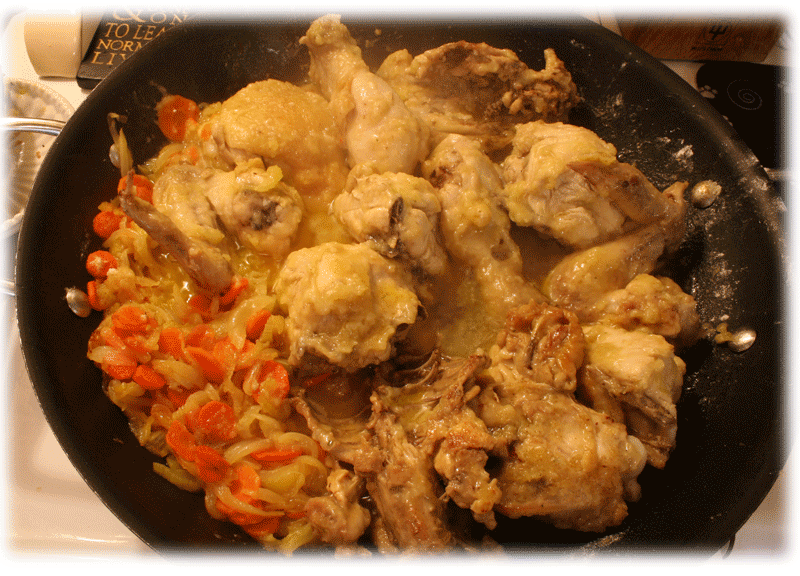 Evenly sprinkle the salt, white pepper and flour on all sides of the chicken, turning and rolling each piece to evenly coat the flour with the butter and juices. Cover again and cook for another 2 minutes, then turn the chicken once and cook another 2 minutes. Evenly sprinkle the salt, white pepper and flour on all sides of the chicken, turning and rolling each piece to evenly coat the flour with the butter and juices. Cover again and cook for another 2 minutes, then turn the chicken once and cook another 2 minutes. |
| 5. |
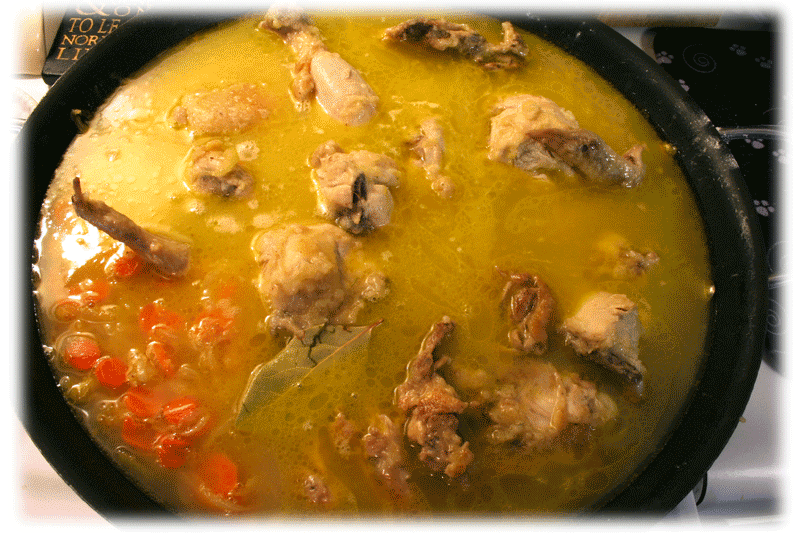 Add the warm chicken stock and wine making sure all the chicken is covered in liquid. Stir to blend the liquid with the flour. Add the fresh herbs and bay leaf then bring to a simmer. Cover and simmer on low heat for 30 minutes. When done, the chicken should be tender and when pinched the juices should run clear, then remove the chicken pieces to a serving dish, cover and keep warm in a 170° F oven. Add the warm chicken stock and wine making sure all the chicken is covered in liquid. Stir to blend the liquid with the flour. Add the fresh herbs and bay leaf then bring to a simmer. Cover and simmer on low heat for 30 minutes. When done, the chicken should be tender and when pinched the juices should run clear, then remove the chicken pieces to a serving dish, cover and keep warm in a 170° F oven. |
| 6. |
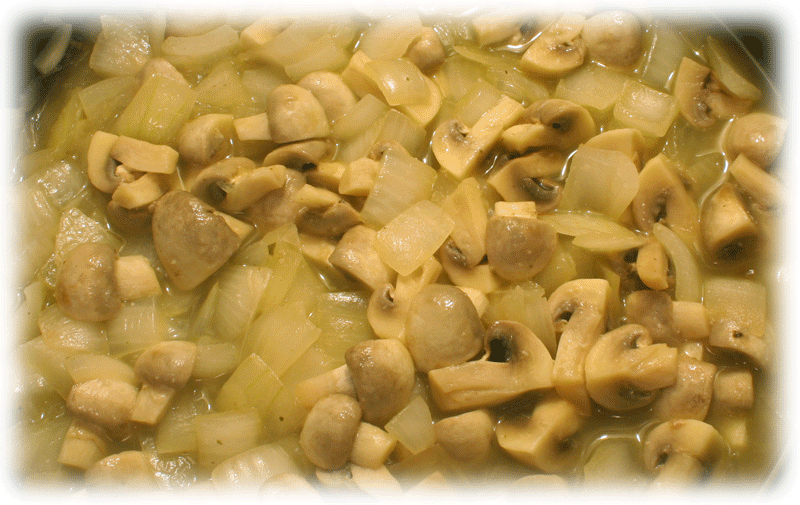 GARNISH prep: While the chicken is cooking in step 5 above prepare the onion and mushroom garnish. Sauté the onions in the tablespoon of butter until soft, then add the mushrooms and toss to coat well. Add the lemon juice, stirring well then the white wine and simmer until mushrooms are slightly softened. Pour the liquid from the onions and mushrooms into the pan with the chicken and simmering liquid. Reserve the onions and mushrooms for step 10 below. GARNISH prep: While the chicken is cooking in step 5 above prepare the onion and mushroom garnish. Sauté the onions in the tablespoon of butter until soft, then add the mushrooms and toss to coat well. Add the lemon juice, stirring well then the white wine and simmer until mushrooms are slightly softened. Pour the liquid from the onions and mushrooms into the pan with the chicken and simmering liquid. Reserve the onions and mushrooms for step 10 below. |
| 7. |
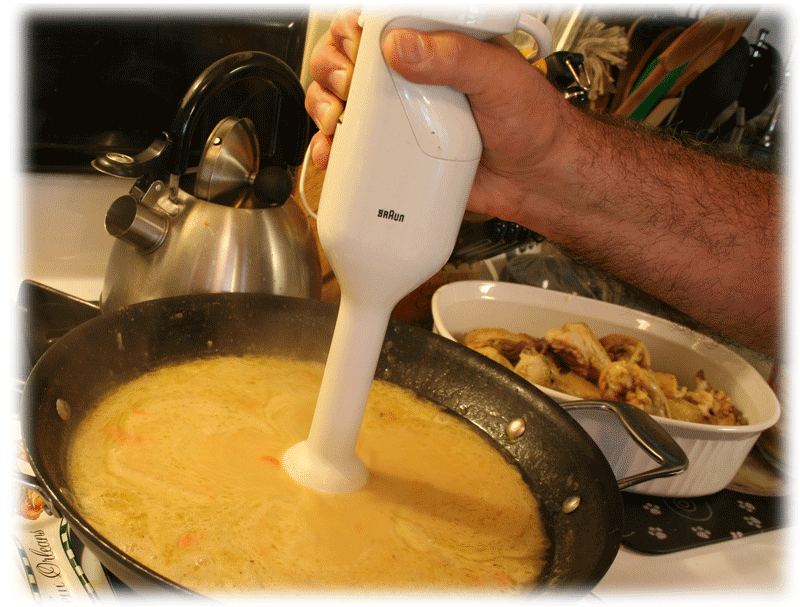 After the chicken is removed from the saucepan, allow the liquid to simmer while skimming the fat off the top. Then using a hand held blender puree the mirepoix vegetables until smooth. Alternatively, allow the liquid to cool a bit and carefully ladle it into the bowl of a food processor or a blender and pulse until smooth, then return it back to the saucepan. Then bring the sauce to a boil and allow it to thicken while stirring frequently until it coats the back of a spoon. After the chicken is removed from the saucepan, allow the liquid to simmer while skimming the fat off the top. Then using a hand held blender puree the mirepoix vegetables until smooth. Alternatively, allow the liquid to cool a bit and carefully ladle it into the bowl of a food processor or a blender and pulse until smooth, then return it back to the saucepan. Then bring the sauce to a boil and allow it to thicken while stirring frequently until it coats the back of a spoon. |
| 8. |
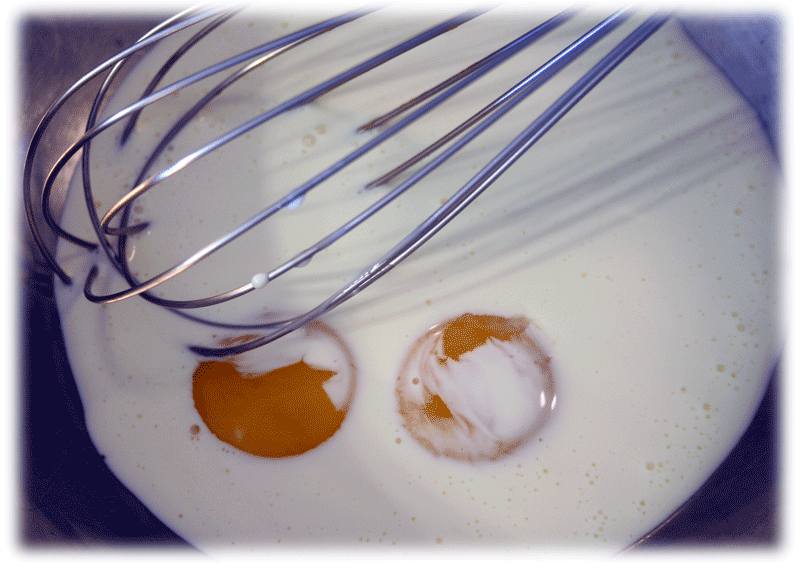 LIAISON prep: In a medium bowl blend the egg yolks with the heavy cream using a wire whip then add the hot sauce one tablespoon at a time until about a cup of it has been added to the egg cream mixture. Then slowly add this egg/cream/sauce liaison back to the sauce and stir well to incorporate. LIAISON prep: In a medium bowl blend the egg yolks with the heavy cream using a wire whip then add the hot sauce one tablespoon at a time until about a cup of it has been added to the egg cream mixture. Then slowly add this egg/cream/sauce liaison back to the sauce and stir well to incorporate. |
| 9. |
Season the sauce with salt and white pepper to taste, then add the lemon juice and pinch of nutmeg and stir well. |
| 10. |
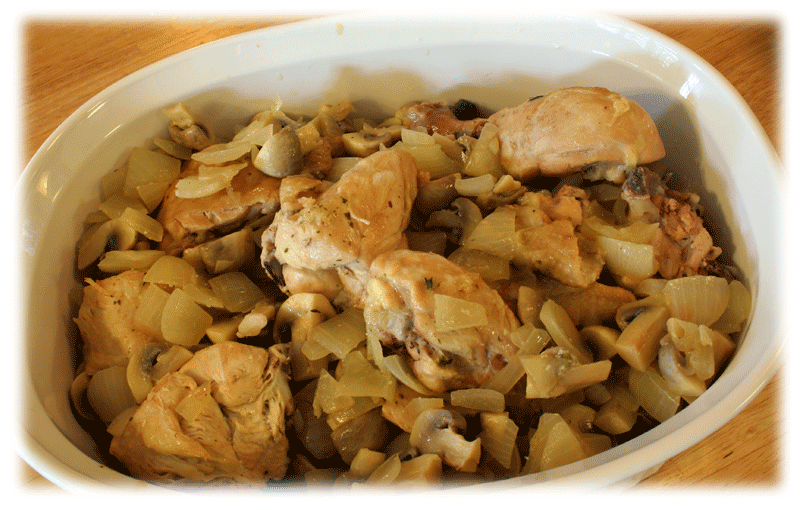 To arrange the dish place the onion and mushroom garnish over the chicken pieces in the serving dish. Then pour the sauce over all this. At this point, the dish can be saved for later service and reheated or served immediately with side dishes of rice, risotto, peas, asparagus, lima beans, okra and tomatoes or any green vegetable. In addition, a garnish of fresh parsley sprigs is optional, but traditional. To arrange the dish place the onion and mushroom garnish over the chicken pieces in the serving dish. Then pour the sauce over all this. At this point, the dish can be saved for later service and reheated or served immediately with side dishes of rice, risotto, peas, asparagus, lima beans, okra and tomatoes or any green vegetable. In addition, a garnish of fresh parsley sprigs is optional, but traditional. |
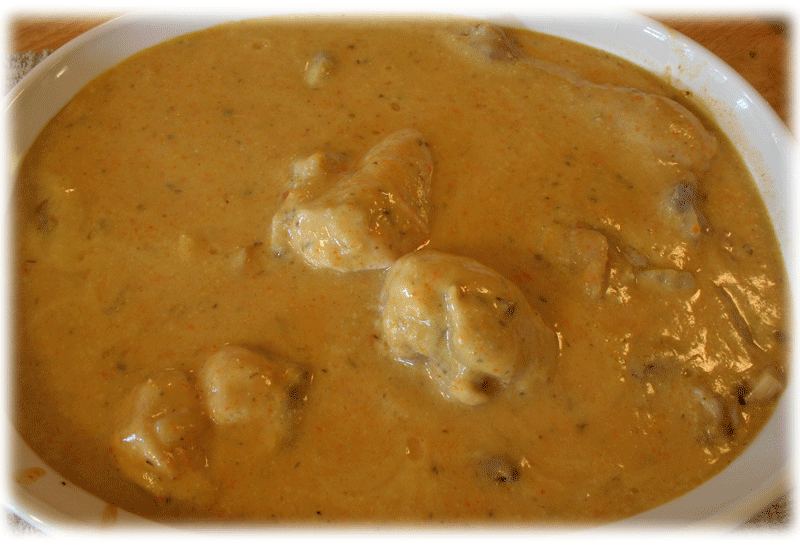 |
Tags: Culture · Entrees · French Cuisine · Julia Child · Recipes
September 22nd, 2009 · 12 Comments
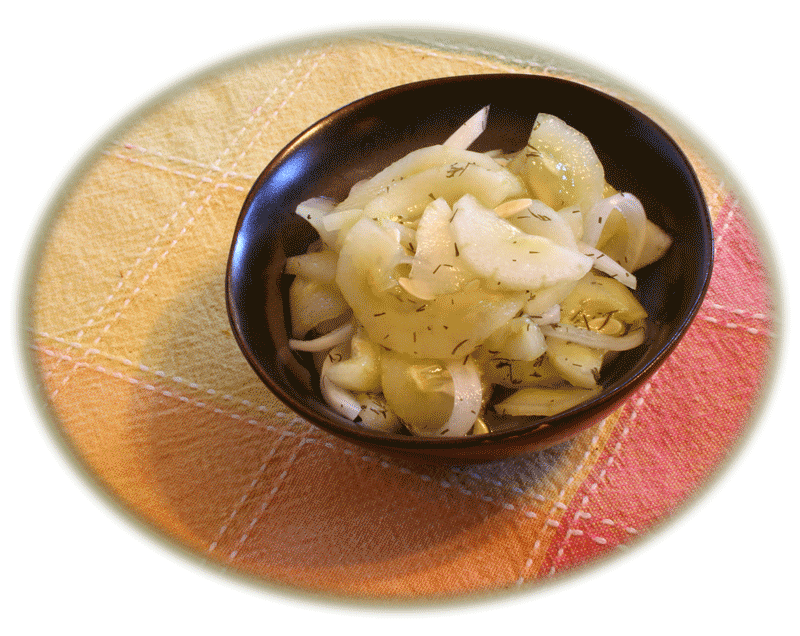
Sometime between the summer of 1974 or 1976, it became a turning point for me as I discovered the love of cooking through public television, specifically with two major influences from watching “The French Chef” cooking show with Julia Child, in addition, “The Frugal Gourmet” cooking show with Jeff Smith. Most of you already know about my omelets story and the mark that Julia Child made in my life and how she started me on the road to cooking at home when I was a teenager. As well, Jeff Smith and his show, which preceded hers every weekday morning on PBS, also influenced me in an extraordinary way. (Note: Click on image for a larger view.)
At the time, Jeff Smith was rather new to the television scene and was selling a small spiral bound cookbook for just a few dollars from his television station located in Seattle, Washington. I secured a copy by sending in a letter with the money asking about how I should get started in a career within the culinary world. A few weeks later, the book arrived in a small manila envelope, but no reply to my request. I was a little upset that he did not respond to my inquiry, but the small cookbook was great. I have and continue to prepare many items from the book, but one that has stood out over all these years is a simple cucumber salad that Jeff included on page 24 and he noted that its origins are from Israel. Jeff also mentions that this salad has a flavor very close to what New York Jews call a “new pickle.” We love it, and with some fresh garden grown cucumbers given to us over the weekend, I just had to make this salad once again, and share it with you today.
| Ingredients |
| 4 |
Large |
Cucumbers, peeled and thinly sliced |
| 1 |
Medium |
Onion, thinly sliced or julienne |
| ¾ |
Cup |
Sugar |
| ½ |
Cup |
Water |
| 1 |
Cup |
White vinegar |
| ½ |
Tbsp |
Dry dill weed |
| Preparation Steps |
| 1. |
Combine the peeled and thinly sliced cucumber and the thinly sliced onions in a large bowl. |
| 2. |
In a small saucepan combine the sugar, water, white vinegar and dry dill weed and bring to boil stirring to dissolve the sugar. |
| 3. |
Pour the liquid over the cucumbers and onions, stir well and chill for 4 to 6 hours. |
Tags: Jeff Smith · Julia Child · Recipes · Salads
September 21st, 2009 · 13 Comments
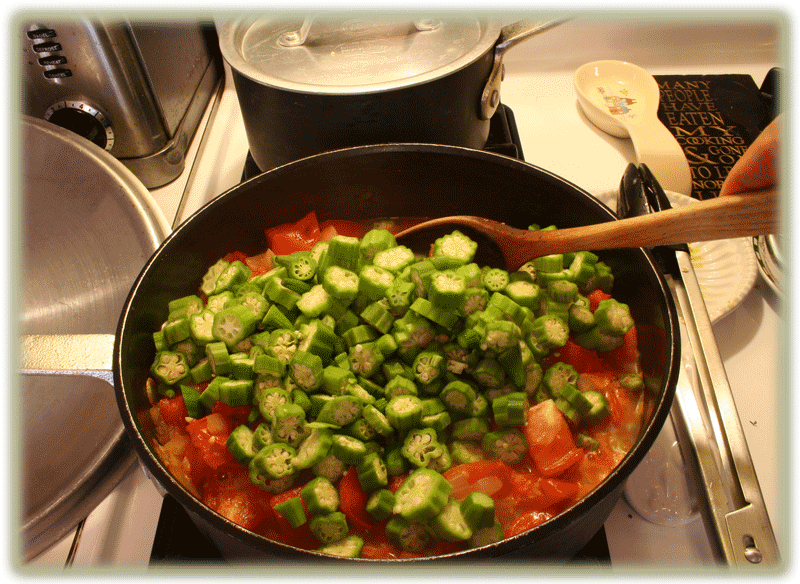 Serves 4 to 6
This preparation is one of those that we grew up with in New Orleans and is popular as not only a staple dish in the south, but also contains the two main ingredients found fresh grown in many gardens and small farms across the southeastern states. Both okra and tomatoes require long and hot growing seasons and the south provides both in records each year. On Saturday, one of our baseball family friends Janet Begley and her family gave us a bag of their heirloom tomatoes and several bags of fresh okra they had just picked from their garden. Janet also gave us a few of their large cucumbers, and I turned them into a crisp cucumber and dill salad, more on that in another post. (NOTE: Click on images for a larger view)
Besides being a major component in gumbo, okra and tomatoes stewed down in the fashion with onions and garlic along with a few herbs like basil, thyme and oregano make a perfect side dish served along with some fresh steamed or boiled rice. Okra and tomatoes create a perfect marriage of taste and texture, similar to the romantic union of oysters and artichokes. Worlds apart, but perfect together! Smaller baby sized okra and juicy ripe tomatoes make the best of this dish, no extra liquid required with the exception of a little red wine vinegar, as the main ingredients create enough of their own juices when covered and stewed until done.
Okra tends to exude a thick slimy liquid when cut and cooked down, which is a benefit for some dishes, especially in the case of gumbo, however, many folks do not like the texture or mouth feel of the slim. Reducing the slimy effects of okra is resolved with an acid such as the juices extracted from the tomatoes, or with the addition of vinegar.
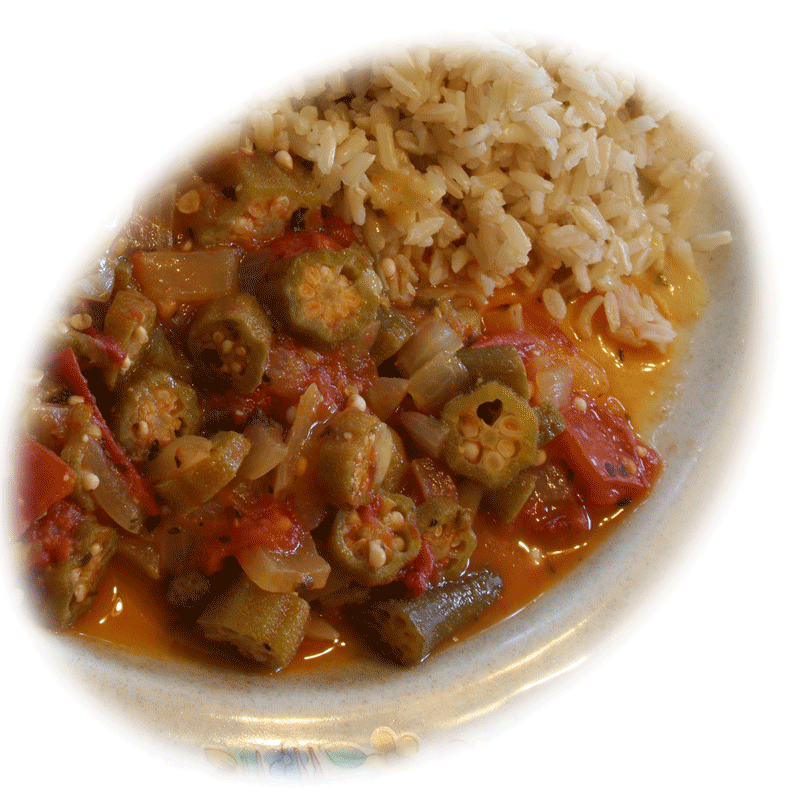
The origins of this dish in the U.S. lead back to Creole heritage, as the word ‘okra’ is also known as quibombo in Spanish, and gombo in French. Slaves from West Africa introduced okra to the Caribbean and U.S. most likely in the 1700’s, and then the Creoles in Louisiana learned to thicken soups with okra (gumbo) which is now the essential ingredient in Creole Gumbo.
If you want to keep this as a side dish and vegetarian then this preparation makes a perfect compliment with steamed or boiled brown rice. If however, you wish, an additional one pound of smoked sausage, ham or a half-pound of tasso when browned in the pan before the addition of the onions turns this into a great main dish item also served over any white or brown rice. Other variations also include an addition of shrimp toward the end of the preparation.
| Ingredients |
| 1 |
Tbsp |
Olive Oil |
| 2 |
Cups |
Onions, large diced |
| 6 |
Cloves |
Garlic, minced |
| 3 |
Cups |
Fresh okra, cut into ½” to ¼” slices |
| 3 |
Cups |
Tomatoes, large diced |
| ½ |
Cup |
Red wine vinegar |
| 1 |
Each |
Bay leaf |
| 1 |
Tbsp |
Basil, fresh chopped |
| 1 |
Tbsp |
Oregano, fresh chopped |
| ½ |
Tbsp |
Thyme, fresh chopped |
| ½ |
Tsp |
Salt |
| ¼ |
Tsp |
White pepper |
| Procedure Steps |
| 1. |
Add olive oil to a 3-quart or larger saucepan and heat over medium high temperature. |
| 2. |
Add the onions and sauté for a few minutes until soft and translucent then add the garlic and stir well, sauté for a few more minutes. |
| 3. |
Add the okra, tomatoes and red wine vinegar and stir well to incorporate. Bring to a boil. |
| 4. |
Add the bay leaf and fresh herbs stirring well then reduce heat to a slow simmer and cover. Simmer for 30 minutes, stirring about every 10 minutes. |
| 5. |
Season to taste with the salt and white pepper, and serve with steamed or boiled brown or white rice. |
Tags: Creole · Culture · Recipes