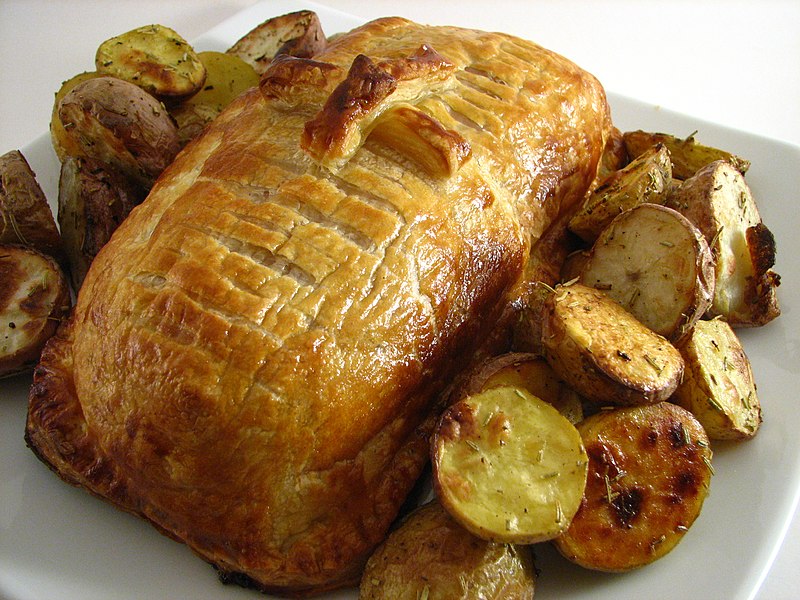
The enduring popularity of this dish—a filet of beef tenderloin coated with pâté de foie gras and a duxelle of mushrooms that are then all wrapped in puff pastry—is legendary. It has remained a favorite in Britain and the U.S. for over a century ever since it was created to honor the Duke of Wellington, a hero of the Napoleonic Wars. I have prepared this dish for many occasions such as birthdays, holidays and special dining events both at home and in the kitchens of many restaurants.
Popularity of this famous dish continues to flourish today with it’s emergence on restaurant menus and also being featured as an entree on Gordon Ramsay’s Hell’s Kitchen in recent episodes. I’ve sold a few copies of this recipe on eBay over the past year, but have decided to take down all my recipe items for sale, and will be selling my spices only from this site. Therefore, these previously on “eBay only” recipes will be added to the blog over the next few days and hope you enjoy them soon.
| Ingredients |
| 1 |
Each |
3 1/2-pound tenderloin of beef trimmed of silver skin and fat |
| 1 pound |
Lb. |
Mushrooms, finely chopped |
| 3 |
Tbsp. |
Unsalted butter |
| To taste |
Salt and fresh cracked black pepper |
| 1/2 |
Lb. |
pâté de foie gras at room temperature |
| 1 |
Lb. |
Thawed puff pastry, plus additional for garnish |
| 1 |
Lg. |
Egg white, beaten |
| 1 |
Lg. |
Egg yolk, beaten with 1 teaspoon of water for egg wash |
| 1/2 |
Cup |
Madeira Wine |
| 2 |
Tsp. |
Arrowroot, dissolved in 1 teaspoon cold water |
| 1/2 |
Cup |
Beef broth or veal demi-glace |
| Procedure Steps |
| 1. |
In a sauté pan over highest heat setting brown the tenderloin on the stove top for 25 to 30 minutes or until a meat thermometer reads 120° F internal. Transfer the tenderloin to a separate pan to cool completely. Discard the fat from the pan juices and reserve juices in another container for later use. |
| 2. |
In the same sauté pan cook the mushrooms in the butter over moderately low heat, stirring until all the liquid is evaporated and the mixture is almost dry or au sec, then season with the salt and pepper and let cool completely. |
| 3. |
On a floured surface, roll 1 pound of the puff pastry dough into a rectangle large enough to enclose the filet completely, about 20 by 12 inches. The dimensions will vary depending on the overall size of the tenderloin. |
| 4. |
Spread the tenderloin evenly with the pâté de foie gras, covering the top and sides; spread the mushrooms evenly over the pâté de foie gras. |
| 5. |
Place the coated tenderloin carefully onto the middle of the dough and fold up the long sides of the dough to enclose the fillet. Brush the dough’s edges with the egg white to seal. Repeat with the ends of dough. |
| 6. |
Transfer the wrapped tenderloin, seam side down, to a sheet pan or a shallow roasting pan and brush with some of the egg wash. Roll out the additional dough and cut shapes with decorative cutters. Arrange the cutouts on top, brush with the remaining egg wash and refrigerate for at least 1 hour, but no more than 2 hours. |
| 7. |
Bake the tenderloin in the middle of a preheated 400°F oven for 30 minutes, reduce the heat to 350°F and bake for 5 to 10 minutes more or until a meat thermometer registers 130°F for medium-rare. Remove and let stand for 15 minutes. |
| 8. |
In sauté pan, bring the reserved pan juices and Madeira to a simmer and continue until reduced by half. Add the arrowroot mixture, beef broth or veal demi-glace, truffles and salt and pepper to taste. Simmer over moderate-low heat, stirring for 5 minutes or until thickened. |
| 9. |
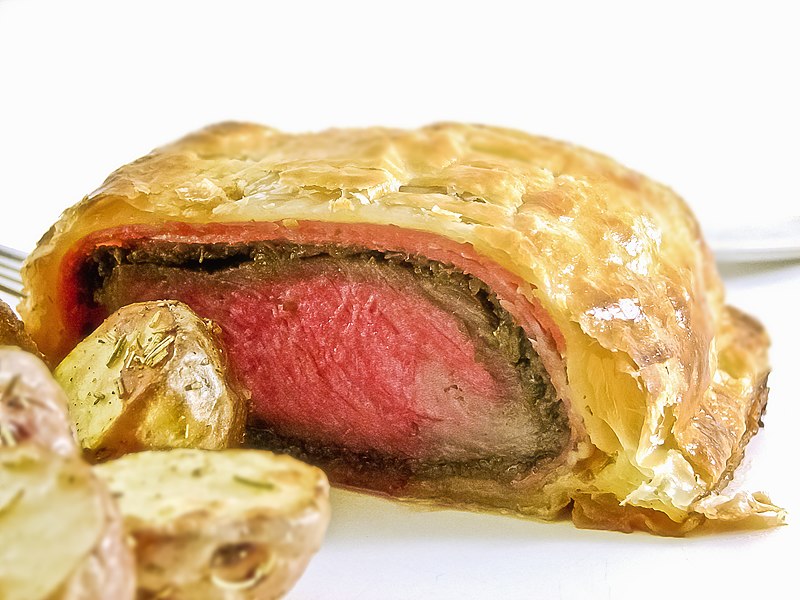 Loosen the tenderloin from the sheet pan, transfer with two spatulas to a serving platter. To serve, cut the fillet into 3/4-inch-thick slices, and serve with the sauce on the side. Loosen the tenderloin from the sheet pan, transfer with two spatulas to a serving platter. To serve, cut the fillet into 3/4-inch-thick slices, and serve with the sauce on the side. |
Images courtesy of Sashertootie, originally posted to Flickr at: http://flickr.com/photos/72939801@N00/2140307504 and http://flickr.com/photos/72939801@N00/2140307512 Images originally posted to Flickr by Sashertootie and confirmed to be licensed under the terms of the cc-by-2.0 as stated on http://en.wikipedia.org/wiki/Beef_Wellington.
Tags: Commentary · Entrees · French Cuisine · Recipes
September 30th, 2009 · 8 Comments
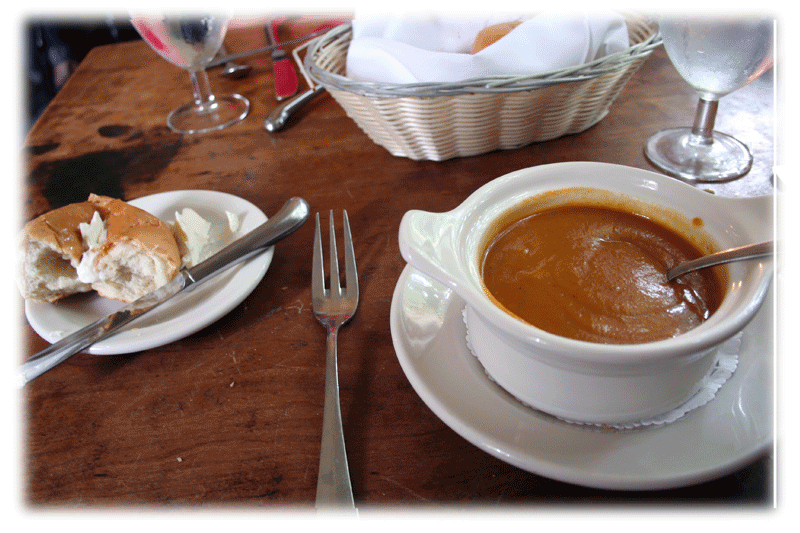
With the cooling fall days in full swing, it is time once again for those warming of the soul soups. Earlier in the week, I put up my Oyster Stew recipe, which is always a favorite, but today I want to highlight another unique soup preparation. Pumpkin fits so perfectly in this simple yet delicious soup recipe and with a hint of spiciness, it sure does make everything nice too.
 To celebrate our 15th wedding anniversary Monique and I ventured to the Blue Ridge Mountains for an extended weekend cabin stay, but on our way we stopped for a visit to Old Salem in Winston-Salem, NC. In addition, for lunch on Friday, we ate at the Old Salem Tavern, which features some of the 18th and 19th century dining fare including a pumpkin soup, which I ordered. You rarely find pumpkin soup on restaurant menus these days, so I had to try it, and now you can try it too with my rendition that closely approaches the flavor and texture of the old world version found today at the Old Salem Tavern. (Note: Click on images for a larger view.)
| Serves 6 to 8 portions |
| Ingredients |
| 3 |
Tbsp |
Butter |
| 2 |
Cups |
Onions, small diced |
| 3 |
Cloves |
Garlic, minced |
| ¼ |
Cup |
Sherry or brandy |
| 2 |
Cups |
Chicken stock, warm |
| ½ |
Cup |
Brown sugar |
| 6 |
Cups |
Pumpkin puree |
| 1 |
Dash |
Hot sauce |
| ½ |
Tsp |
Cloves, ground |
| ¼ |
Tsp |
Nutmeg, ground |
| ½ |
Tsp |
Coriander, ground |
| 1 |
Pinch |
Cayenne pepper |
| 1 |
Cup |
Half and Half or Heavy Cream |
| To taste |
Salt |
| Procedure Steps |
| 1. |
Melt butter in a large stockpot and then sauté the onions until soft and translucent, stirring often, then add the garlic and sauté for another 2 minutes. |
| 2. |
Add the sherry or brandy and allow to simmer for 1 minute, then add the chicken stock and bring to a boil. Add the brown sugar and stir to dissolve. |
| 3. |
Add the pumpkin puree and stir well to incorporate. Bring back to a boil then reduce heat to a slow simmer. Add the hot sauce and remaining spices and stir well. Simmer on low for 20 minutes. |
| 4. |
Fold in the half-and-half or heavy cream and then season to taste with the salt. |
Tags: Recipes · Soups
September 29th, 2009 · 3 Comments
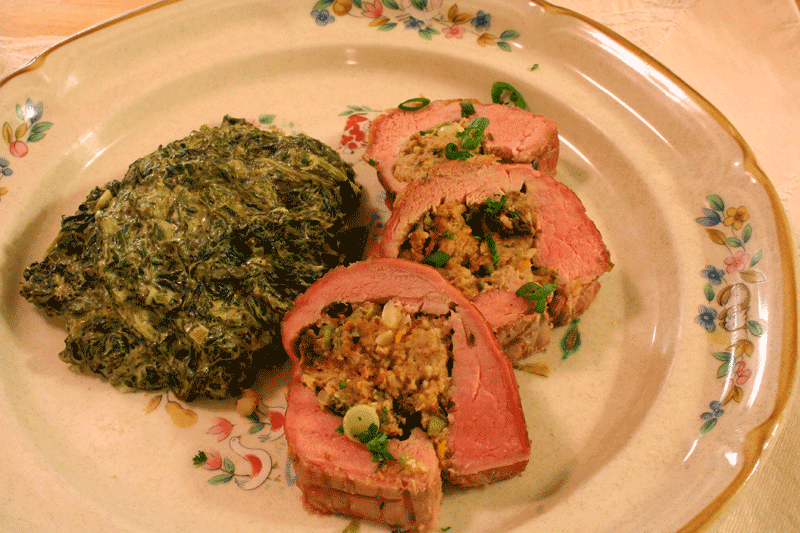
Pork tenderloin lends itself to many preparations including this stuffed version, which turns out is a melt in your mouth dish. This recipe originally appeared in February 2009 as part of my Foodbuzz 24 event article featuring dining fare on railroads of the bygone era, specifically the golden age of dining by rail. This recipe inspired by the Western Pacific railroad and The California Zephyr also known as the CZ, or “Silver Lady”, the streamliner began service in 1949 between Oakland, California and Chicago, Illinois. I have reprised the recipe here in its individual form to cast a limelight on its significance with fall dining fare.
I can image riding in the sleek diner aboard the CZ and noshing on this pork tenderloin with stuffing while riding across the vast expanse of the American southwest. The image shown here is of the stuffed pork tenderloin served with a side of creamed spinach. Another option with this dish would be to smoke the stuffed tenderloins with oak, hickory, cherry or pecan wood for several hours, and then finishing the roasting in the oven until the pork reaches an internal temperature of 145° F.
| Yield: 8 portions |
| Ingredients |
| 2 |
Each |
Pork tenderloins, 1 pound average each |
| Marinade |
| ½ |
Cup |
Raisins, dark |
| 2 |
Cups |
Beer |
| ¼ |
Cup |
Cider vinegar |
| Stuffing |
| 6 |
Slices |
Whole grain, multi-grain, or oatmeal bread (divided) |
| 2 |
Tsp. |
Orange zest |
| ½ |
Cup |
Onion, finely chopped |
| ½ |
Cup |
Celery, finely chopped |
| 1 |
Tbsp |
Fresh rosemary, chopped |
| 1 |
Tbsp |
Fresh thyme, chopped |
| Pinch each |
Salt and white pepper |
| 1 |
Cup |
Chicken stock |
| Dry Rub |
| ¼ |
Cup |
Brown sugar |
| 1 |
Tsp |
Salt |
| 1 |
Tsp |
White pepper |
| Basting Mixture |
| 2 |
Tbsp. |
Apricot preserves |
| 2 |
Tsp. |
Dijon mustard |
| 2 |
Tbsp |
Grand Mariner (or any citrus liquor) |
| 1 |
Tsp |
Fresh rosemary, chopped |
| Procedure Steps |
| 1. |
Remove any “silver” skin and fat from the surface of the tenderloins. Rinse under water and pat dry. Cut a lengthwise slit down center of the tenderloins a little over 2/3 of the way through the meat. Place the tenderloins between 2 sheets plastic wrap, and flatten to an even thickness about 1/3 of an inch thick. Transfer the meat to a large flat container such as a roasting pan. |
| 2. |
In a small bowl combine raisins, beer and cider vinegar to make a marinade. Pour this over the pork tenderloins making sure that the meat is completely covered well. Marinade in the refrigerator at least 6 hours covered. |
| 3. |
Take 3 slices of the bread and place them into the bowl of a food processor and blend to form coarse bread crumbs. Cut the remaining 3 bread slices into ½-inch cubes. In a large bowl combine bread crumbs, bread cubes, orange zest, onions, celery, rosemary, thyme, and a pinch of salt and white pepper then mix well. Slowly add chicken stock creating a moist but not too wet stuffing that holds well together. Cover and set stuffing aside in the refrigerator until the tenderloins are finished marinating |
| 4. |
After at least 6 hours of marinating, pour off and discard the liquid but reserve the raisins. Add the raisins to the stuffing mix and stir well to incorporate. |
| 5. |
Combine brown sugar with 1 Tsp salt and 1 Tsp white pepper then rub this over all sides of the tenderloins. |
| 6. |
Spread the stuffing over the top of the open tenderloins to within ½-inch from all edges. Roll up each tenderloin in a jellyroll fashion, starting at the narrow end. Tie each tenderloin securely with kitchen string at 2-inch intervals. |
| 7. |
Place a wire rack into a shallow roasting pan and arrange the tenderloins into the pan at least 3 – 4 inches apart. Roast uncovered in a 350° F oven. |
| 8. |
Combine the apricot preserves, Dijon mustard, Grand Mariner and the 1 Tsp. of fresh rosemary to create the basting mixture. Occasionally baste the tenderloins with the prepared basting mixture. Roast for 50 minutes, or until they reach an internal temperature of 145° F. Remove the pan from the oven and cover loosely with foil and allow to rest 10 minutes before slicing into ½-thick portions. |
Tags: Commentary · Entrees · Holidays · Recipes
September 28th, 2009 · 12 Comments

Fall passed its first week and with the cooler temperatures, it signals in the entrance of hearty warm edible delights including soups and stews. Besides making their way into prominence on menus, oysters are also coming into their peak as well. The old saying was that oysters should only be eaten in months that have the letter “R”, so September has one and we are safely reminded. This old tale goes back to the days before mass refrigeration was available and the storage of seafood stayed fresher longer when the temperatures were cooler, thus the months with “R” coincided with fall and winter seasons here in North America, or the months between September to April. Now that modern refrigeration has solved many of the storage and transportation issues of the bygone era, seafood and oysters in particular are enjoyed year round. Tradition seems to hold fast even with the advent of modern technology becoming more of the fabric, that oysters are enjoyed more in the fall, winter and spring than in the warm summer months.
One of my favorite seafood soups is this oyster stew, which originally appeared on the CCR blog back in February 2009 for the Foodbuzz 24 event featuring the railroad themed article. I decided to pull this recipe out to make its own appearance, thus highlighting it from the other recipes that became hidden in the original posting. While this recipe is known as “Oyster Stew” to me it really has the feel and taste of a thick cream soup. The original recipe title was “Oysters in Cream Stew”, taken from the early Southern Railway dining car menu item, I’ve renamed it here for simplicity and because “Oyster Soup” just does not have the same ring to it at all.
| Yield: 8 portions |
| Ingredients |
| ½ |
Lb. |
Bacon, medium diced |
| ¼ |
Lb. |
Butter, unsalted (1 stick) |
| 1 |
Cup |
Onions, fine diced |
| 1 |
Cup |
Celery, fine diced |
| 2 |
Tbsp. |
Garlic, minced |
| 1 |
Cup |
Green onions, chopped (divided) |
| 2 |
Tsp |
Thyme, fresh, chopped |
| 2 |
Tsp |
Oregano, fresh chopped |
| 1 |
Cup |
Flour, all-purpose |
| ½ |
Cup |
White wine |
| 2 |
Cups |
Milk |
| ½ |
Lb. |
Yukon Gold potatoes, peeled and small diced, blanched to al dente, drained and chilled |
| 2 |
Cups |
Heavy Cream |
| 1 |
Quart |
Oysters, drained and liquor liquid reserved |
| 2 |
Cups |
Heavy Cream |
| ¼ |
Cup |
Parsley, fresh chopped |
| To taste |
Salt and white pepper |
Procedure Steps |
| 1. |
Heat a large stock pot over a medium-high heat and cook the bacon until crisp, then remove and drain on a plate lined with paper towels, reserve for later. Remove all put 2 tablespoons of the bacon fat from the pan. |
| 2. |
Turn the heat to medium and then add the stick of butter and allow it to melt. Add the onions and celery and sweat until soft and translucent. Then add the garlic, ½ cup of the green onions, the thyme and oregano and stir well to incorporate. Add the flour and stir well to incorporate while absorbing the butter, bacon fat and vegetable juices until it forms a blond or light roux. |
| 3. |
Slowly add the white wine and stir well to incorporate until smooth. Then add the reserved oyster liquor and stir well to blend into the roux-white wine mixture, a wire whisk helps at this stage. Then add the milk and whisk well again. Add the potatoes and the heavy cream then bring the liquid to a boil then reduce heat to a low simmer for 10 minutes. If the consistency seems a bit too thick add more milk and stir well. |
| 4. |
Add the oysters and allow them to simmer until they just start to curl on the edges. |
| 5. |
Add the parsley and reserved bacon and simmer for another minute or so. Garnish each cup or bowl with a pinch of chopped green onion and parsley. |
Tags: Recipes · Seafood · Soups