September 5th, 2013 · Comments Off on Another Reason to like Dr. Andrew Weil
Weil Lifestyle, the company founded by heath guru Dr. Andrew Weil, cut its ties with the Grocery Manufacturers Association (GMA) after 24,623 signatures were collected by the Organic Consumers Association (OCA) which pointed out the hypocrisy of telling customers and followers that genetically modified organisms (GMOs) should be labeled, while paying dues to the largest contributor to the campaign (NO on 522) to defeat GMO labeling in Washington State.
Dr. Weil publicly announced last week that it has ended membership with the GMA because they are not aligned with them on the GMO Labeling issue. Yeah for Dr. Weil for standing up for what he knows is right!
I’ve read several Dr. Weil books and created some fine meals with his recipes too, I knew then (2002) when I first saw him on a PBS special that his teachings and “Lifestyle” were a good thing! His recent action in support of GMO Labeling confirms again why I like him so much!
Thank you Dr. Weil!
Comments Off on Another Reason to like Dr. Andrew WeilTags:Recipes
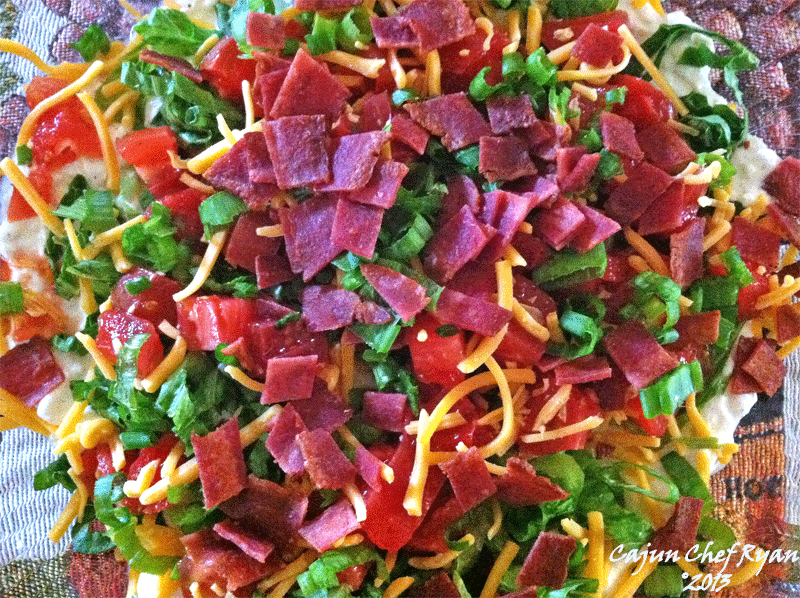
This preparation originated as a Weight Watchers snack recipe that I found on the WW Mobile app from my iPhone, and is only 2 WW Points+ per serving. We’ve made it twice now, once for us at home and once for a party we attended during the Labor Day weekend, it went over really well, you can tell when the plate gets cleaned before the party ends. I doubled the recipe for the party version which I built on top of a round party platter. The photos in this piece show the normal sized portion which is enough for eight servings.
This spread is a perfect new addition to any football tailgating tradition.
Farmacology arrived in my mailbox and I immediately got excited about the opportunity to snuggle up with this book, as the subject matter is right up my thought pathway and in tune with my permaculture and permacuisine projects. In Farmacology Miller documents her visits to seven family farms and describes what she experienced and learned at each including topics about health, wellness, healing, and beauty. The core of her hands on agricultural farm experiences and the specific aspects that each farm utilizes are translated into alternative health and wellness practices. Experiencing the relationships that the family farmers have established with their environments, Miller has taken what she learned and has translated it to health and wellness treatment procedures and therapies that follow in tune with the balances of nature that the farms have established.
A synopsis of what Miller learns and then teaches us from each family farm:
Jubilee Biodynamic Farms – She starts out living with a vegetable farmer in Carnation, Washington State who shows us how the principles he uses to rejuvenate his soil through crop rotation, good tilth, and rotating cows in fields apply just as well to our own bodies. At Jubilee Biodynamic Farms we also discover the direct links between healthy soil and healthy humans. We also learn about the cycles and five steps to perfect tilth, in particular I will highlight the first step which is to “Invest in Farm-Fresh”; meaning that the only way to be a part of the farm cycle is to eat the food that has been grown in a sustainable eco-cycle permaculture model. Just because you buy a food item that has an organic label on it does not mean it supports a farm-fresh system.
Rockin’ H Ranch – Next, she visits with a beef farmer at the Rockin’ H Ranch in Norwood, Missouri who shows how a holistic cattle-grazing method can grow resilient calves and resilient children. One eye-opening experience for Miller occurred in the ranch kitchen after dinner one night when Dawnnell, the farmer’s wife offered her a tall glass of fresh Jersey cow raw milk. Much to her chagrin and suffering from a history of lactose intolerance, Miller dutifully and without hesitation took the humble offering from Dawnnell in a polite manner and loved the milk to the last drop. She woke the next morning and did not suffer any of the typical systems that occur after she drinks processed milk.
Heartland Egg and Arkansas Egg – On her third adventure, Miller visits with an egg farmer in Arkansas who introduces us to the counter-intuitive idea that stress can keep us productive and healthy. We discover why the stressors associated with a pasture-based farming system are beneficial to animals and humans while the duress of factory farming can make us ill.
Scribe Winery – Next she visits with a vintner in Sonoma, California, who reveals the principles of Integrated Pest Management and helps us understand how this gentler approach to controlling unwanted bugs and weeds might be used to treat invasive cancers in humans.
La Familia Verde Urban Farms – Of all places she travels to an urban setting to visit with a farmer in the Bronx who shows us how a network of gardens offers health benefits that extend far beyond the nutrient value of the fruits and vegetables grown in the raised beds. For example, did you know that urban farming can lower the incidence of alcoholism and crime?
Morning Myst – In her last account she visits with an aromatic herb farmer in Fruitland, Washington State who teaches us about the secret chemical messages we exchange with plants—messages that can affect our mood and even keep us looking youthful.
If you are remotely interested in health, wellness, permaculture, permacuisine and want to learn more about how the soil around us can bring us back down to earth, then you should get a copy of this book. I had many an “A-ha” moment while reading this one, and I plan to learn more from the reference section that provides a multitude of resources to keep me busy for the next few months as I dive deeper into the world of organics, food, soil, and cuisine.
Now for the contest! Win a copy of Farmacology!
I can now offer one copy of this book to a winning reader! Yes, that’s right; William Morrow publishing has offered to deliver one fresh copy of this book to anyone with a U.S. address. If you want to enter my contest all you need to do is one or all of several things, the more you do the better your chances of winning:
Comment about this blog post right here on the CCR blog,
Share the link to this blog post on your blog,
Send a Tweet to all your Twitter followers linking to this blog post and including me in your Tweet,
Share this on your Facebook page and let me know that you did,
Like or comment on the update on my Cajun Chef Ryan Facebook page,
The contest ends at midnight Eastern Time U.S. on Sunday, September 8, 2013.
The winning entry will be announced on Monday, September 9, 2013!
On Monday, September 9, 2013 I will then collect all the entries and put them in the order in which they were received, and then I will use a random number generator to select the winning entry. Your email address will be necessary when entering the contest so that I can contact the winning entry and then obtain the correct U.S. mailing address which will be given to a representative of William Morrow / Harper Collins who will expedite the shipping to the winning person!